
A motorcycle road rash injury claim that Nebraska riders file after a crash is not always straightforward, especially when permanent scarring is involved. If you have suffered a road rash that left lasting scars or visible disfigurement, you may be entitled to far more compensation than just your medical bills.
Road rash sounds minor to people who have never experienced it. In reality, a high-speed pavement crash strips away layers of skin, damages nerves, and can leave permanent marks that affect your appearance, your confidence, and your ability to work. Knowing how these injuries are evaluated and what insurance adjusters often overlook puts you in a much better position to recover fair compensation.
What Types of Permanent Scarring Can Result from Motorcycle Road Rash?
Not all road rash heals cleanly. The severity of the injury, how quickly you received medical care, and your body’s own healing response all determine whether a scar becomes permanent and how noticeable it remains.
Abrasion Depth and Surface Area
Road rash is generally classified into three levels, similar to burn injuries. First-degree road rash affects only the outer skin layer and typically heals without lasting marks. Second-degree injuries go deeper, often leaving discoloration or textured skin. Third-degree road rash reaches muscle or bone and almost always results in permanent disfigurement.
Surface area matters just as much as depth. A large patch of third-degree road rash across the forearm, thigh, or face causes far more long-term damage than a small, deep wound in a hidden location. Insurance companies often minimize surface area in their early evaluations, which is one reason having detailed medical documentation from day one is critical.
Hypertrophic and Keloid Scarring
Two of the most serious scar types following motorcycle injuries are hypertrophic scarring and keloid scar formation. Hypertrophic scars are raised, red, and thickened. They stay within the boundary of the original wound but can remain prominent for years. Keloid scars grow beyond the wound’s edges and can continue spreading for months after the injury.
Both types can cause itching, tightness, and chronic pain in addition to visible disfigurement. People with darker skin tones are statistically more likely to develop keloid scars, and treatment is rarely simple or cheap. Laser therapy, steroid injections, and surgical revision are common but not always fully effective.
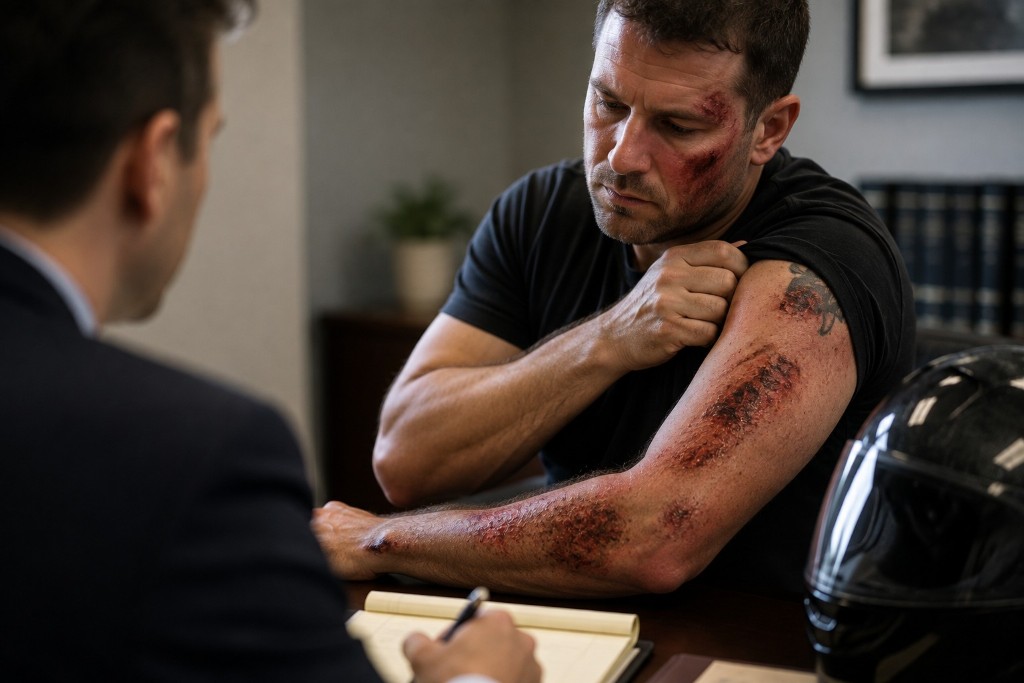
Facial and Visible Location Scarring
Scars on the face, neck, hands, or arms carry additional legal and emotional weight in Nebraska personal injury cases. A scar hidden under clothing affects your life differently from one visible in every professional or social interaction. Courts and juries recognize this distinction. Visible scarring in these locations often supports higher pain and suffering in Nebraska damages cases because of the daily psychological impact on the injured person.
How Do Nebraska Courts Calculate Compensation for Road Rash Disfigurement?
Nebraska does not use a fixed formula to calculate disfigurement damages. Instead, juries and courts consider several factors that reflect how the scarring affects every part of your life.
Economic Damages: Medical and Future Treatment Costs
The clearest category of compensation covers what you have already paid and what you will pay in the future. This includes emergency care, skin grafting, wound management, and any planned cosmetic surgery following a crash to improve scar appearance or restore function.
Future medical costs are often underestimated in early settlement offers. Scar revision surgery can cost thousands of dollars per procedure, and some patients require multiple rounds of treatment over several years. We always work to account for realistic long-term costs, not just what you have spent so far.
Non-Economic Damages: Pain, Suffering, and Disfigurement
Nebraska law allows injured people to recover compensation for physical pain, emotional distress, and the loss of how they used to look and feel about themselves. A permanent disfigurement claim in Nebraska is treated seriously, particularly when the scarring affects visible areas of the body or interferes with daily activities.
There is no cap on non-economic damages in Nebraska motorcycle crash cases involving permanent disfigurement. This is an important distinction. Some states limit what juries can award for pain and suffering, but Nebraska gives juries the flexibility to award amounts that genuinely reflect the harm done to a person’s life.
Lost Wages and Earning Capacity
If your scarring or the underlying injury prevents you from returning to work in the same capacity, you may also recover lost wages and reduced earning capacity. This applies not only to physical jobs where mobility and strength matter but also to careers where appearance matters, such as sales, client-facing work, or other public-facing professions.
What Evidence Strengthens a Road Rash Scarring Claim in Nebraska?
Building a strong motorcycle road rash injury claim requires more than photographs and a doctor’s note. The type and quality of evidence you gather in the weeks and months after the crash can significantly affect your outcome.
Medical Records and Specialist Documentation
Start with complete, detailed medical records from every provider involved in your care. Emergency room records, wound care notes, dermatologist evaluations, and plastic surgery consultations all help establish the severity of your injuries. A specialist who documents the classification, size, and likely permanence of your scarring gives your claim a credible foundation that is difficult for an insurer to dismiss.
Ask your providers to document functional limitations, not just appearance. If scarring tightens the skin near a joint and limits your range of motion, that needs to be in writing.
Photographic and Video Evidence
Photographs taken immediately after the crash, during wound care, and at regular intervals over the following months create a visual timeline of your injury. Juries and adjusters respond to visual evidence. Still photos are valuable, but short videos showing how your scarring affects movement or how it looks under different lighting can be even more powerful.
Make sure photos include a neutral background and consistent lighting. Date and label everything. Keep originals stored safely in more than one place.
Personal Impact Statements and Witness Testimony
Your own account of how the scarring affects your daily life matters enormously. A written journal documenting pain levels, emotional struggles, social situations you avoided, and activities you can no longer enjoy gives the court a personal, human picture of your losses.
Family members, coworkers, and friends who can speak to visible changes in your behavior, mood, or appearance also provide meaningful support. This kind of testimony humanizes the injury in a way that medical records alone cannot accomplish.
Frequently Asked Questions
How long do I have to file a motorcycle road rash injury claim in Nebraska?
Nebraska’s statute of limitations for personal injury claims is generally four years from the date of the crash. However, acting sooner gives us a better chance to gather strong evidence before it disappears. We recommend speaking with one of our attorneys as early as possible after your injury.
Can I recover compensation for emotional distress caused by disfigurement in Nebraska?
Yes. Nebraska law allows recovery for emotional distress and psychological harm resulting from permanent disfigurement. If your scars have caused anxiety, depression, or social withdrawal, those impacts are part of your damages. We work to document and present these losses clearly.
Does my road rash scar have to be fully healed before I can file a claim?
No, and in fact, filing too early can sometimes work against you. We typically recommend waiting until your doctor can assess the scar’s permanence before settling, so you do not accept compensation that fails to account for future treatment needs or lasting impairment.