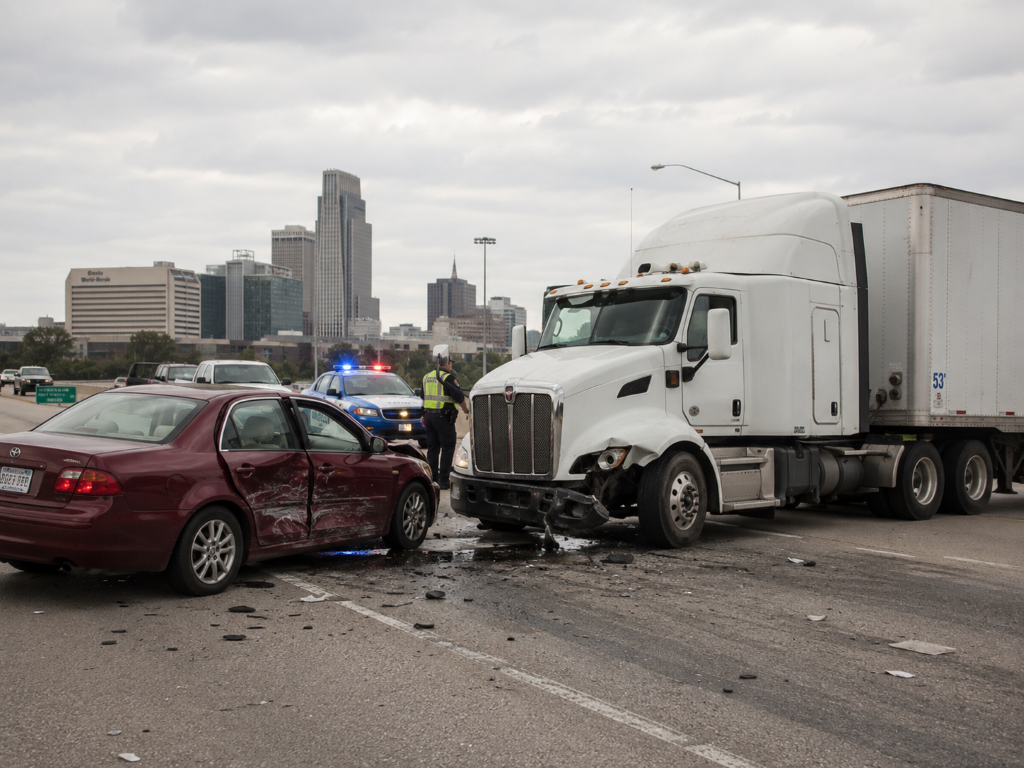
If you were hurt in a crash involving a commercial truck on I-80, finding a truck accident attorney near you should be one of your priorities. Semi-truck collisions aren’t like typical car accidents. The size of the vehicles, the federal rules that govern them, and the number of parties who can share legal responsibility all make these cases far more complex from the start.
I-80 runs directly through Omaha and carries one of the highest volumes of commercial truck traffic in the entire Midwest. Nebraska sits at a crossroads of major national freight routes, which means semis, 18-wheelers, and other large commercial vehicles are a constant presence on that stretch of highway. When something goes wrong at highway speeds, the consequences for the people in smaller vehicles are often severe.
Why Are Semi Truck Accidents on I-80 More Serious Than Regular Car Crashes?
The physical reality of a semi-truck collision in Omaha is different from a standard two-car accident. A fully loaded semi can weigh up to 80,000 pounds. Most passenger vehicles weigh somewhere between 3,000 and 5,000 pounds. That difference in mass creates a completely different level of force in a crash, and the resulting injuries often reflect it.
The Size and Weight Factor
When a semi strikes a smaller vehicle at highway speed, the energy transferred in that impact is enormous. Victims in these crashes often face injuries that go far beyond whiplash or minor fractures. Traumatic brain injuries, spinal cord damage, internal bleeding, and crush injuries are all common outcomes. Recovery timelines are longer, medical costs are higher, and the long-term effects on a person’s ability to work and live normally are often significant.
Multiple Points of Failure
A semi truck is not one machine. It includes a cab, a trailer, a braking system, a load, and dozens of mechanical components working together. Any one of those parts can fail. A tire blowout, a brake failure, an unsecured load, or a mechanical defect can each cause a crash independently. That means investigators may have more than one cause to consider when determining what led to a collision.
Road Conditions on I-80 Near Omaha
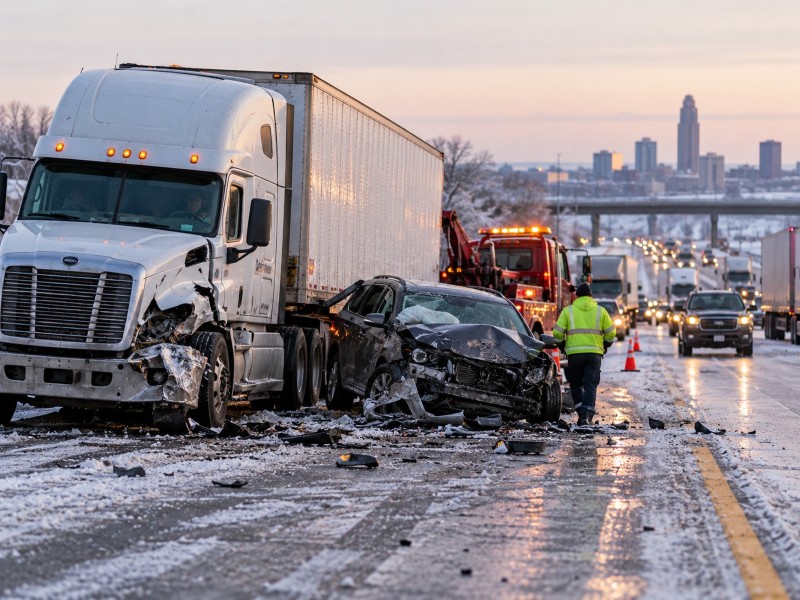
Nebraska winters create serious hazards on I-80, and large trucks handle slick or icy roads very differently than passenger cars. Stopping distances for a loaded semi can stretch to 400 feet or more under normal conditions. On wet or frozen pavement, that distance increases further. When a truck driver fails to adjust their speed or following distance for conditions, the risk of a rear-end collision or jackknife crash rises sharply.
What Federal Trucking Rules Apply to I-80 Commercial Drivers Near Omaha?
Commercial truck drivers operating on I-80 near Omaha aren’t only subject to Nebraska traffic laws. The Federal Motor Carrier Safety Administration, commonly known as the FMCSA, also regulates them. These FMCSA regulations that Nebraska carriers must follow cover everything from how many hours a driver can be behind the wheel to how a vehicle must be inspected before hitting the road.
Hours of Service Rules
One of the most important sets of federal trucking rules covers hours of service. Truck drivers are legally limited in how many consecutive hours they can drive before taking a required rest break. These limits exist because drowsy driving is a major factor in commercial vehicle accidents. Drivers must keep detailed logs, and violations of these rules are sometimes key evidence in a crash case.
When we review a truck accident case, one of the first things we look at is the driver’s log. If a driver exceeded their legal driving hours before a crash, that fact matters a great deal.
Vehicle Inspection and Maintenance Requirements
Carriers must inspect their trucks before each trip and keep maintenance records for every vehicle in their fleet. A truck with worn brakes, bald tires, or faulty lights should not be on the road. When a mechanical problem contributed to a crash, those maintenance records can show whether the carrier knew about an issue and failed to fix it.
Cargo Loading Standards
Federal rules govern how cargo must be loaded, distributed, and secured on a commercial trailer. An improperly balanced load can shift during transit and cause a driver to lose control. An unsecured load can fall from the vehicle entirely, creating a hazard for every driver behind it. These rules exist for a reason, and failures to follow them can form the basis of a semi-truck injury claim.
How Does a Truck Company Try to Avoid Paying After a Crash?
After a commercial vehicle accident, trucking companies don’t wait to start building a defense. They often have accident response teams, investigators, and attorneys working within hours of a crash. Understanding how they approach these situations can help you protect yourself.
Controlling the Evidence
Trucking companies know that the evidence most harmful to them can disappear quickly. Electronic logging device data, dashcam footage, GPS records, and maintenance logs all exist in digital form and can be overwritten or deleted. Companies sometimes preserve only the data that helps them while letting other records lapse. A formal legal preservation request, sometimes called a spoliation letter, can require the company to retain all relevant evidence.
Shifting Blame to the Other Driver
A common defense strategy in trucking company liability cases is to argue that the smaller-vehicle driver was at fault. They may claim the car cut off the truck, changed lanes unsafely, or was speeding. Even when a truck driver made the critical error that caused the crash, the company’s legal team will look for anything to shift or share the blame. Nebraska uses a modified comparative fault standard, which means the amount you can recover may be reduced if you are found to share some responsibility for the crash.
Using a Quick Settlement to Close the Case
Some trucking companies or their insurance carriers move quickly to offer an early settlement. This can feel like a relief for someone dealing with injuries and medical bills. But early offers are often far below what a case is actually worth. Once you accept a settlement and sign a release, the claim is closed. Before you consider any agreement, you need a full picture of your injuries, future medical needs, and lost income.
Frequently Asked Questions
How is a semi truck accident different from a regular car accident legally?
Semi truck accidents involve federal regulations, multiple potentially liable parties, and commercial insurance policies that operate differently from personal auto coverage. The driver, the carrier, a cargo company, or a maintenance contractor can each carry legal responsibility depending on how the crash happened. These overlapping layers make truck accident cases more complex than standard car accident claims.
What should I do right after a crash with a commercial truck on I-80?
Seeking medical attention is the most important step, even if you feel fine at the scene. After that, preserving evidence matters greatly. If you are able, photograph the scene, get the truck’s DOT number and carrier name, and avoid making recorded statements to any insurance company before speaking with an attorney. Details that seem minor at the time can become important later.
How do I know if I have a valid semi truck injury claim in Nebraska?
A valid claim generally requires showing that another party acted negligently and that their negligence directly caused your injuries. In truck accident cases, negligence can come from a driver violating hours-of-service rules, the carrier failing to maintain the vehicle, or a third party improperly loading the cargo. We can review the circumstances of your crash and help you understand whether you have grounds to pursue a claim.