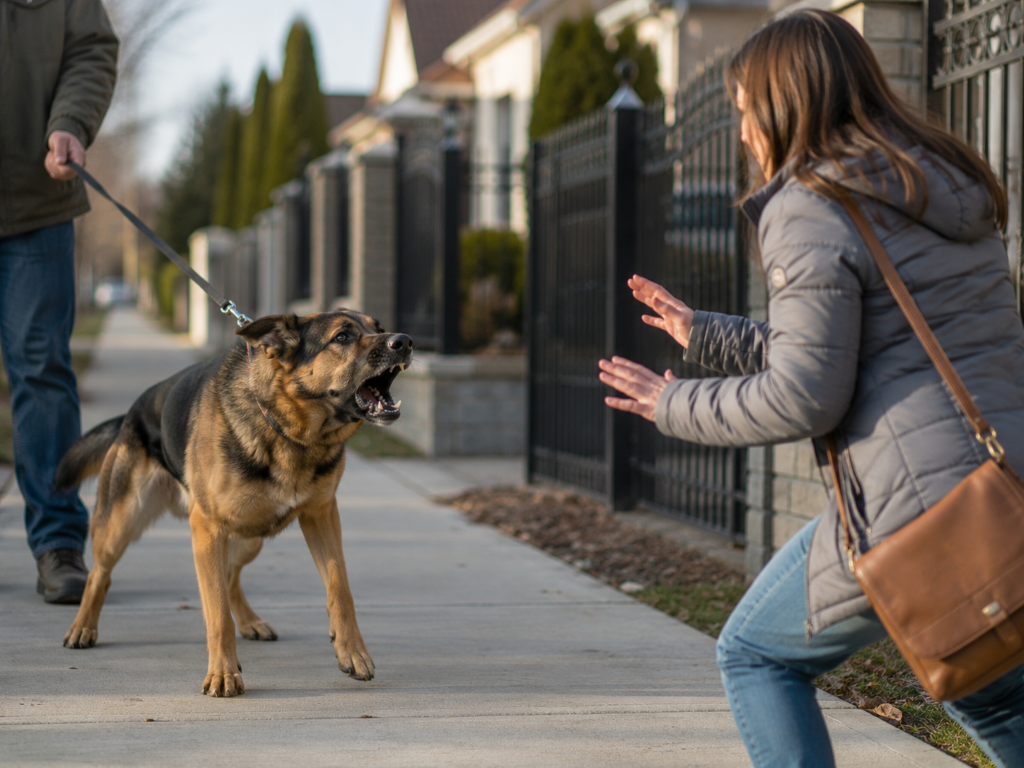
If a dog in Nebraska attacked you, you may have more legal protection than you realize. We have seen how confusing state law can feel when you are hurt and trying to figure out your options. Nebraska’s strict liability statutes shift significant responsibility onto dog owners, and understanding how that law works is important after an attack.
What Does Strict Liability Mean in a Nebraska Dog Bite Case?
Strict liability means a dog owner can be held legally responsible for injuries their dog causes, even if the dog had never shown aggressive behavior before. You do not have to prove the owner was careless. You do not have to prove the owner knew the dog was dangerous. The attack itself is enough to establish the owner’s legal responsibility under Nebraska law.
This is a powerful protection for injury victims. In many legal claims, you have to show that someone failed to act reasonably. Strict liability removes that burden in dog bite cases.
What Nebraska Revised Statute 54-601 Actually Says
Nebraska Revised Statute 54-601 is the foundation of dog bite law in this State. It holds that the owner or keeper of a dog is liable for any injury, death, or loss caused by that dog. The statute applies whether the dog has bitten before. It applies whether or not the owner was present at the time of the attack.
This law does not give dog owners a pass the first time their animal hurts someone. Nebraska deliberately chose to prioritize victim compensation over shielding owners from consequences.
Who Qualifies as a “Keeper” Under Nebraska Law
The statute does not only apply to the person who owns the dog on paper. It can also apply to a “keeper,” meaning someone who cared for, housed, or controlled the dog at the time of the attack. If a neighbor was watching the dog and the attack happened on their property, civil liability may extend to them as well.
This distinction matters because it broadens who can be held accountable for your injuries.
What the Victim Must Prove Under Strict Liability
Even under strict liability, you still must establish certain facts. You generally need to show that a dog attack occurred, that you were injured as a result, and that the person you are pursuing the claim against owned or kept the dog. You do not need to prove the owner’s fault or negligence.
That said, defenses do exist, and the circumstances of how the attack happened can still affect your case.
When Does Strict Liability Apply to Omaha Dog Attacks?
Nebraska’s strict liability statute applies broadly, but it is not unlimited. Knowing exactly when it applies and when it might not is critical to building a strong claim after a dog attack.
The Attack Must Happen in a Place Where You Have a Right to Be
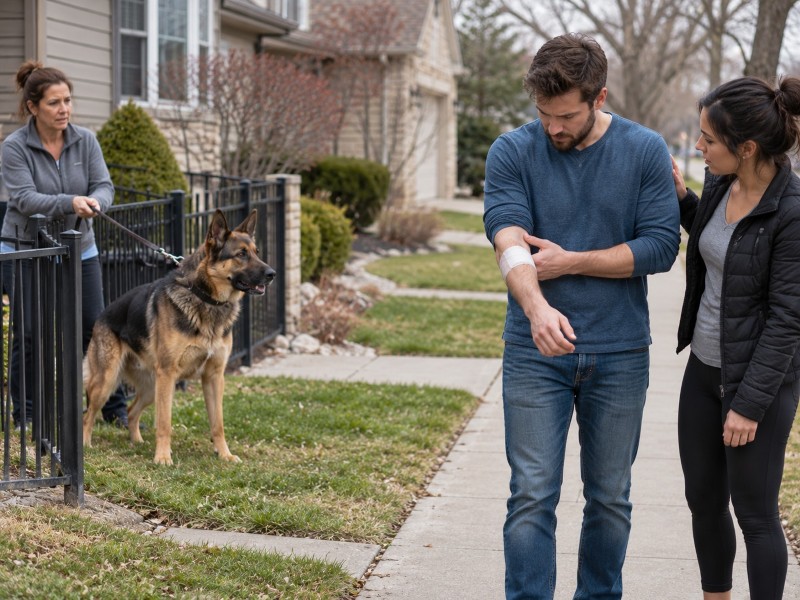
Dog owner responsibility under Nebraska law typically applies when the victim was lawfully on the property where the attack occurred, or in a public space. If you were bitten while walking on a public sidewalk, trespassing is not an issue. If you were lawfully visiting someone’s home, the same protection applies.
However, if you were unlawfully on private property at the time of the attack, the owner may use that as a defense. This is one of the most common arguments raised in dog bite cases.
Provocation Can Affect Your Claim
Provocation is another defense that comes up regularly. If the dog owner can show that you provoked the animal, that argument may reduce or eliminate their liability under the strict liability statute. Nebraska courts have considered provocation in the context of whether a reasonable person would have understood their actions could cause a dog to react aggressively.
Provocation does not mean simply being near the dog or making noise. It typically involves some direct action toward the animal.
Children and Vulnerable Victims in Omaha
Dog attacks affect children at a disproportionate rate. Nebraska’s strict liability protections apply to child victims just as they apply to adults. Children often cannot recognize threatening behavior from a dog, and courts tend to view provocation claims differently when the victim is very young.
For families dealing with a child’s injury, understanding how dog owner responsibility applies in these situations matters.
How Is Strict Liability Different From the One-Bite Rule?
Many states follow what is commonly called the one-bite rule. Nebraska does not, but understanding the difference helps clarify just how strong the protections are for victims under state law.
What the One-Bite Rule Actually Means
The one-bite rule is a common law principle that says a dog owner is only liable for injuries if they knew, or had reason to know, that their dog was likely to cause harm. In practice, this often means the dog had to bite or threaten someone before. That prior incident puts the owner on notice that the dog is dangerous.
Under this framework, a first-time attack leaves the victim with an uphill legal battle. They must prove the owner knew of the dog’s dangerous tendencies, which is often very difficult.
Nebraska Chose a Different Path
Nebraska’s legislature rejected the one-bite rule in favor of strict liability. By passing Nebraska Revised Statute 54-601, lawmakers decided that dog owners take on full legal responsibility for their animals from the moment they become the owner or keeper. There is no grace period. There is no first free bite.
This reflects a policy judgment that victims should not bear the financial and physical consequences of an attack simply because a particular dog had not previously harmed anyone.
How This Shapes What We Do for Clients
When we work with someone injured in a dog attack, we do not need to spend time investigating the dog’s history to establish liability. We focus on documenting your injuries, identifying the owner or keeper, and building a complete picture of how the attack affected your life. The absence of a prior bite record does not weaken your case under Nebraska law.
Frequently Asked Questions
What is the difference between strict liability and the one-bite rule in Nebraska?
Nebraska follows a strict liability standard under Nebraska Revised Statute 54-601, which means dog owners are responsible for injuries their dog causes regardless of whether the dog has ever bitten anyone before. The one-bite rule, used in some other states, requires the victim to prove the owner already knew the dog was dangerous. Nebraska removed that requirement entirely.
Can a dog owner avoid liability if I was partly at fault for the attack?
Nebraska courts can consider factors like provocation and whether you were lawfully present where the attack happened. If the owner can show you provoked the dog or were trespassing, that may affect your ability to recover compensation. However, each case turns on its specific facts, and many defenses that sound strong at first do not hold up under closer examination.
How does a dog bite attorney in Omaha help with a strict liability claim?
Even though strict liability removes the need to prove the owner’s negligence, it still requires meaningful legal work. We help identify who owned or kept the dog, gather medical records and injury documentation, and address any defenses the owner raises. Having experienced guidance through that process can make a real difference in how your claim is handled.