
Being struck by a vehicle changes everything in an instant. If you or someone you love are hurt while walking in Omaha, understanding your rights under Nebraska law is the first step toward protecting yourself, and working with a trusted pedestrian accident lawyer can make a meaningful difference in how your case unfolds.
Pedestrian accidents often leave victims with serious injuries, mounting medical bills, and questions about what happens next. Nebraska law gives injured pedestrians real legal protections, but knowing how to use them requires understanding how fault works, who is responsible, and what steps preserve your ability to recover.
What Legal Rights Do Pedestrians Have in Nebraska?
Nebraska law recognizes that pedestrians are among the most vulnerable people on the road. When a driver fails to respect that, the law gives injured pedestrians a path to seek compensation for their losses.
The Right of Way and What It Means for You
Pedestrian right of way in Nebraska law is straightforward in many situations. Drivers must yield to pedestrians in marked crosswalks and at many unmarked crosswalks at intersections. This applies throughout Omaha, whether someone is crossing Dodge Street or walking through a quiet residential neighborhood.
Having the right of way matters legally. It helps establish that the driver had a duty to yield and failed to do so. That failure can form the foundation of a pedestrian liability claim under Nebraska personal injury law.
Your right of way is not absolute, though. Pedestrians also have responsibilities under state law. Running into traffic, crossing against a signal, or darting between parked cars can affect how a claim is evaluated.
Your Right to Seek Compensation
Under Nebraska personal injury law, an injured pedestrian has the right to pursue financial recovery for losses caused by another person’s negligence. These losses can include:
- Medical expenses, both current and future
- Lost wages if injuries prevent you from working
- Pain and suffering
- Rehabilitation and therapy costs
- Emotional distress related to the accident and recovery
The legal term for these recoverable losses is damages. Calculating them accurately requires a careful review of medical records, employment history, and the full impact the injury has had on your daily life.
Your Right to Legal Representation
No one is required to navigate a pedestrian injury claim alone. You have the right to retain an attorney who can communicate with insurance companies on your behalf, gather evidence and protect your interests throughout the process. Many people find that legal support helps them better understand what their claim is actually worth.
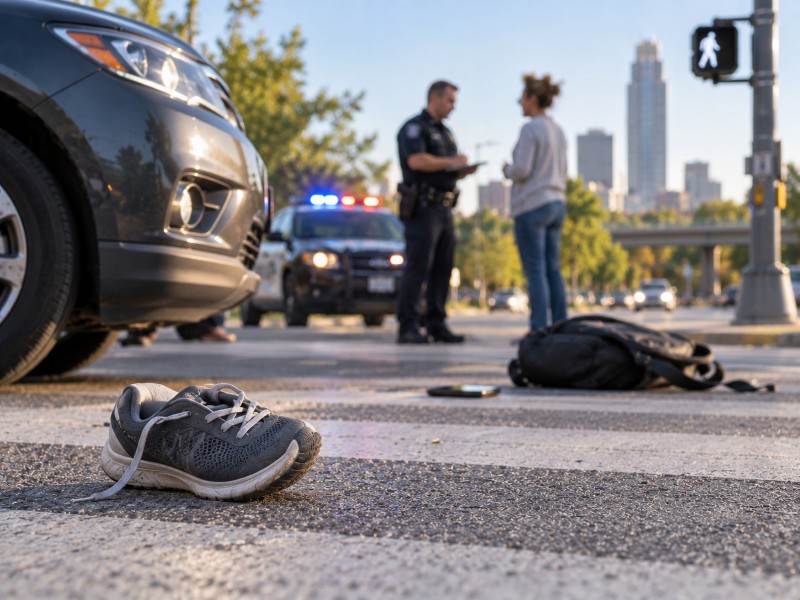
Who Is Responsible When a Driver Hits a Pedestrian in Omaha?
Responsibility in a pedestrian accident is not always as simple as it looks. While a driver who hits a pedestrian often bears significant fault, the full picture depends on the incident’s specific facts.
Driver Negligence as the Primary Cause
Most pedestrian accidents in Omaha involve some form of driver negligence. This includes behaviors like:
- Speeding in areas with heavy foot traffic
- Running red lights or stop signs
- Failing to yield at a crosswalk
- Distracted driving, including phone use
- Driving while impaired
When a driver’s negligence directly causes a pedestrian’s injuries, that driver can be held legally liable. Their auto insurance is typically the first source of compensation. Nebraska requires drivers to carry minimum liability coverage, though serious injuries often exceed those minimums.
Third-Party Liability
Sometimes responsibility extends beyond the driver. Depending on the circumstances, other parties may share liability:
- Employers may be responsible if the driver was working at the time of the accident
- Government entities could bear responsibility if a dangerous road condition, broken traffic signal, or missing crosswalk signage contributed to the crash
- Vehicle manufacturers may be liable if a defect contributed to the collision
Identifying all responsible parties is an important part of building a strong claim. Overlooking a liable party can mean leaving compensation on the table.
What Omaha Traffic Laws Say About Driver Duties
Omaha traffic laws include rules on speed limits near pedestrian zones, school crossings, and residential areas. Drivers must also exercise reasonable care even when a pedestrian may not have the technical right of way. Nebraska courts have consistently held that drivers owe a duty of care to anyone lawfully on or near the road.
When a driver violates a specific traffic law and that violation causes injury, it can go towards evidence of negligence in a civil claim.
How Does Nebraska Fault Law Affect Your Pedestrian Injury Claim?
Nebraska follows a legal standard known as comparative negligence, and it plays a major role in how pedestrian injury claims are resolved. Understanding this rule helps you set realistic expectations for your case.
How Comparative Negligence Works
Under Nebraska’s comparative negligence rule, fault for an accident can be divided between multiple parties, including the injured person. If you are found to be partially at fault for the accident, your compensation is reduced by your percentage of responsibility.
For example, if a driver is found 80 percent at fault and you are found 20 percent at fault, you can recover 80 percent of your total damages. Nebraska uses a modified version of this rule, which means that if your share of fault reaches 50 percent or more, you may not be able to recover anything.
This is why the details of what happened before, during, and after the accident matter so much. Insurance adjusters often try to assign as much fault as possible to the injured pedestrian to reduce or deny a claim.
How Insurance Companies Use Fault Arguments
Insurance companies handling pedestrian accident claims frequently investigate whether the pedestrian did anything that could be considered careless. They look at whether you crossed legally, whether you were visible, and whether you were paying attention to your surroundings.
These arguments can significantly reduce a claim’s value if you don’t address them with solid evidence. Witness statements, traffic camera footage and accident reconstruction reports can all help counter an insurer’s attempt to shift blame onto the injured party.
Protecting Your Claim From the Start
Certain steps after an accident help preserve the strength of your claim under Nebraska law. Seeking medical attention immediately creates a medical record that links your injuries to the crash. Reporting the accident to police generates an official record. Avoiding detailed statements to insurance adjusters before consulting an attorney helps prevent your words from being used against you.
We understand how these fault discussions unfold and what evidence matters most in building a complete picture of what happened. Give us a call to discuss your case today.
Frequently Asked Questions
How long do I have to file a pedestrian accident claim in Nebraska?
Nebraska law sets a statute of limitations that generally gives injured pedestrians four years from the date of the accident to file a personal injury lawsuit. However, claims involving government entities may have shorter deadlines and additional notice requirements. Speaking with an attorney as soon as possible helps ensure you don’t miss anything.
What if I was partially at fault for the pedestrian accident in Omaha?
Being partially at fault does not automatically bar you from recovering compensation. Under Nebraska’s comparative negligence rule, your damages are reduced by your percentage of fault, as long as your share of fault is below 50 percent. We can review the facts of your situation and explain how fault may be allocated in your specific case.
What does a pedestrian accident lawyer actually do for my case?
A pedestrian accident lawyer handles the legal and procedural work on your behalf. This includes investigating the accident, gathering and preserving evidence, communicating with insurance companies, calculating your full damages, and representing your interests in negotiations or court proceedings. The goal is to make sure your rights under Nebraska law are fully protected throughout the process.