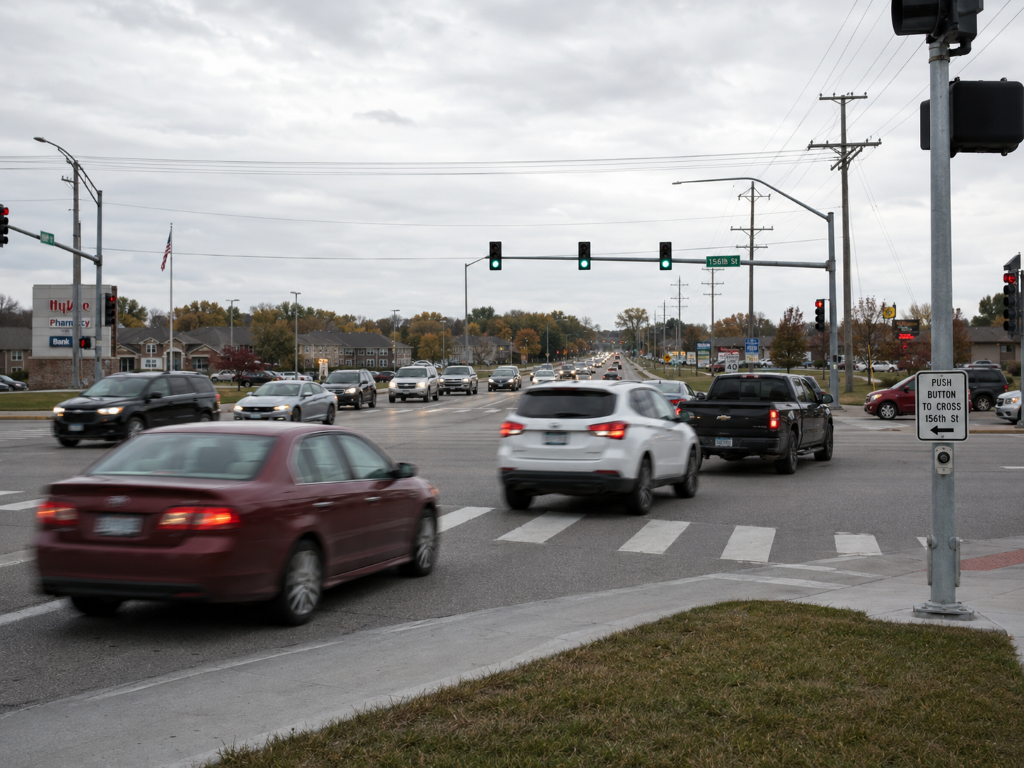
Walking in Omaha can be far more dangerous than most people realize. The most dangerous streets for pedestrians in Omaha share common traits: heavy vehicle traffic, poor signal timing, and intersections designed more for cars than people.
When someone is struck by a vehicle at a crosswalk, the aftermath can be overwhelming. Medical bills pile up. Time away from work adds financial stress. And in many cases, the crash was preventable. Understanding which streets carry the highest risk helps people protect themselves and helps those already injured understand what may have gone wrong.
Which Omaha Intersections Record the Most Pedestrian Collisions?
Pedestrian crashes in Omaha tend to cluster around specific corridors and intersections. These are not random locations. They are places where road design, traffic volume, and pedestrian behavior collide in predictable, documented ways.
The Dodge Street Corridor
Dodge Street is one of Omaha’s most consistently flagged corridors for pedestrian incidents. Running east to west across the city, it carries high vehicle speeds and heavy daily traffic. Near Midtown, where the street transitions from a more urban environment to wider, faster lanes, pedestrians cross at intersections that were never designed to handle both foot traffic and fast-moving vehicles safely. Crossing multiple lanes gives drivers more time to accelerate and leaves walkers exposed longer.
72nd Street and Its High-Volume Crossings
72nd Street from Dodge down toward Pacific Street sees a consistent pattern of pedestrian danger. This stretch includes commercial entrances, bus stops, and apartment complexes that generate steady foot traffic throughout the day and into the evening. When pedestrians attempt to cross mid-block, or at intersections where signal timing does not account for slower walkers, the risk of an Omaha intersection pedestrian accident increases sharply.
Downtown Omaha and the Old Market Area
Downtown intersections near the Old Market and along Farnam Street present a different kind of risk. These areas mix pedestrian density with distracted driving. Pedestrians assume they have the right of way, and drivers navigating narrow one-way streets often focus on parking rather than crosswalks. Crashes in this zone tend to involve lower vehicle speeds but still cause serious injuries, particularly to older pedestrians and children.
What Traffic Patterns Make These Crossings Extra Dangerous?
The danger at these locations is not accidental. It comes from a combination of traffic patterns that repeat across Omaha’s most hazardous corridors.
High Vehicle Speeds Near Pedestrian Zones
When roads are engineered for vehicle throughput, speed limits often reflect what is convenient for drivers rather than what is safe for pedestrians. A person struck by a vehicle traveling at 40 miles per hour faces a dramatically higher chance of serious injury than someone struck at 25 miles per hour. Several of Omaha’s most dangerous crossings sit on arterial roads where posted speeds and actual driving speeds don’t match.
Poor Pedestrian Signal Timing
Pedestrian signal timing is one of the most overlooked factors in crosswalk safety. Many signals across Omaha give walkers a countdown that does not account for older adults, people with mobility limitations, or families with young children. When someone cannot clear a multi-lane road before the signal changes, they are left standing in active traffic. This is not a rare situation. It is built into intersections that have not been updated in years.
Left-Turn Conflicts at Multi-Lane Intersections
Multi-lane intersection risk spikes when left-turning vehicles and pedestrians share the same signal phase. A driver completing a left turn is focused on oncoming traffic, not on a person stepping off the curb. This conflict is a leading contributor to pedestrian injuries at signalized intersections throughout Nebraska. It is especially dangerous at wider intersections where the pedestrian crossing path extends farther into the roadway.
The pattern across these dangerous crossings in Nebraska is consistent: roads built for speed, signals that do not protect slower walkers, and turning movements that create blind-spot conflicts. Together, these factors push certain locations into repeated crash history.
How Do Poorly Designed Intersections Contribute to Walker Injuries?
Traffic engineering in Omaha, as in most American cities, has historically prioritized vehicle movement. That approach leaves gaps in pedestrian safety that show up in crash reports year after year.
Missing or Inadequate Crosswalk Infrastructure
Some of Omaha’s most dangerous intersections lack visible crosswalk markings, accessible curb cuts, or overhead lighting. At night, a pedestrian crossing at an unmarked intersection is nearly invisible to an approaching driver. Without proper infrastructure, even a cautious walker faces serious exposure. These are not fringe locations. Many sit along bus routes and near residential neighborhoods where people routinely walk to reach transit, schools, and grocery stores.
Sight Line Problems Created by Road Design
Sight line obstruction is a structural problem at several Omaha intersections. Parked cars, utility poles, commercial signage, and landscaping can all block a driver’s view of an approaching pedestrian until the last moment. When road design places these obstructions near crossings, it transfers risk onto the person on foot. A driver who cannot see a pedestrian until they are already in the lane has almost no time to stop, especially at higher speeds.
The Role of Urban Sprawl and Road Width
Omaha’s growth pattern has created wide arterial roads that cut through neighborhoods where people walk regularly. These roads were designed to move suburban traffic quickly, not to accommodate pedestrians crossing a six-lane road. The combination of road width, vehicle speed, and limited pedestrian infrastructure is a formula for injury. We see the real consequences of these design failures when people come to us after being hurt at intersections that have recorded multiple crashes over the years.
Understanding how design contributes to a crash matters in personal injury cases. When an intersection has a documented history of pedestrian accidents, that history can matter in questions of negligence and liability. Drivers have a legal duty to operate a vehicle safely. In some circumstances, a municipality can bear responsibility for known dangerous conditions it failed to correct.
These are not simple cases. Every pedestrian injury involves a unique set of facts. But knowing a location has a pattern of crashes, and understanding why that pattern exists, gives injured pedestrians a clearer picture of what happened and why.
The most dangerous streets for pedestrians in Omaha are so for reasons that go beyond any single driver or any single moment of inattention. The roads themselves, the signals, and the engineering choices behind them all play a role. People are injured at some of Omaha’s most hazardous crossings, and we understand how these structural factors intersect with individual cases.
If you or someone you know has been hurt while walking in Omaha, understanding the intersection’s history and design is a meaningful starting point. The most dangerous streets for pedestrians in Omaha are well-documented, and that documentation can matter when it comes time to examine what caused a crash.
Frequently Asked Questions
Which streets in Omaha are considered the most dangerous for pedestrians?
Dodge Street and 72nd Street consistently appear in Omaha crash data as high-risk corridors for pedestrians. Downtown intersections near Farnam Street also see frequent conflicts between foot traffic and vehicles. These locations share common risk factors including high speeds, poor signal timing, and multi-lane crossing distances that leave walkers exposed.
What should I do after being hit by a car as a pedestrian in Omaha?
Seek medical attention first, even if your injuries seem minor at the time. Document the scene with photos, gather witness contact information, and file a police report to preserve important details. Speaking with an attorney who handles pedestrian injury cases in Nebraska can help clarify your legal options before you engage with any insurance company.
Can a poorly designed intersection affect my pedestrian injury claim in Nebraska?
Intersection design can be a relevant factor in a personal injury case. When a location has a documented history of crashes, or when missing infrastructure contributed to the collision, those facts can factor into liability. When evaluating a pedestrian injury case, we look at the full picture of what caused a crash, including road conditions, signal timing, and sightline issues.