If you ride with a passenger in Nebraska, understanding the Nebraska motorcycle helmet law is not just about your own safety. It can also affect your legal responsibility and your passenger’s ability to recover compensation if something goes wrong. An Omaha motorcycle accident attorney can help explain how helmet rules, passenger injuries, and liability issues may factor into a motorcycle accident claim.
Does Nebraska Motorcycle Helmet Law Apply to Passengers?
Nebraska’s helmet requirement applies to everyone on a motorcycle, not just the operator. Whether you are the driver or the person sitting behind or to the side, the law treats helmet use as mandatory under the same standard.
What the Nebraska Traffic Code Actually Says
Under Nebraska Revised Statute 60-6,279, every person operating or riding on a motorcycle must wear a helmet that meets the standards set by the U.S. Department of Transportation. That word “riding” is key. It covers passengers just as clearly as it covers riders. There is no separate category or exception for pillion riders, who are passengers seated behind the operator.
The helmet must meet federal safety standards. Simply strapping on any old piece of headgear does not satisfy the law. If it does not carry DOT certification, it does not constitute legal compliance.
Who Is Required to Wear a Helmet in Nebraska
Nebraska is considered a universal helmet state. That means helmet use is required for all riders and passengers regardless of age or experience level. Some states require helmets only for younger riders or for those without certain endorsements. Nebraska draws no such line.
Here is a quick summary of who must comply:
- The motorcycle operator, no matter how experienced
- Every passenger on the bike, including adults
- Anyone riding in a sidecar that is attached to the motorcycle
There are no partial exemptions based on age, license type, or distance traveled. If you are on the bike, you need a helmet.
How Nebraska Compares to Other States
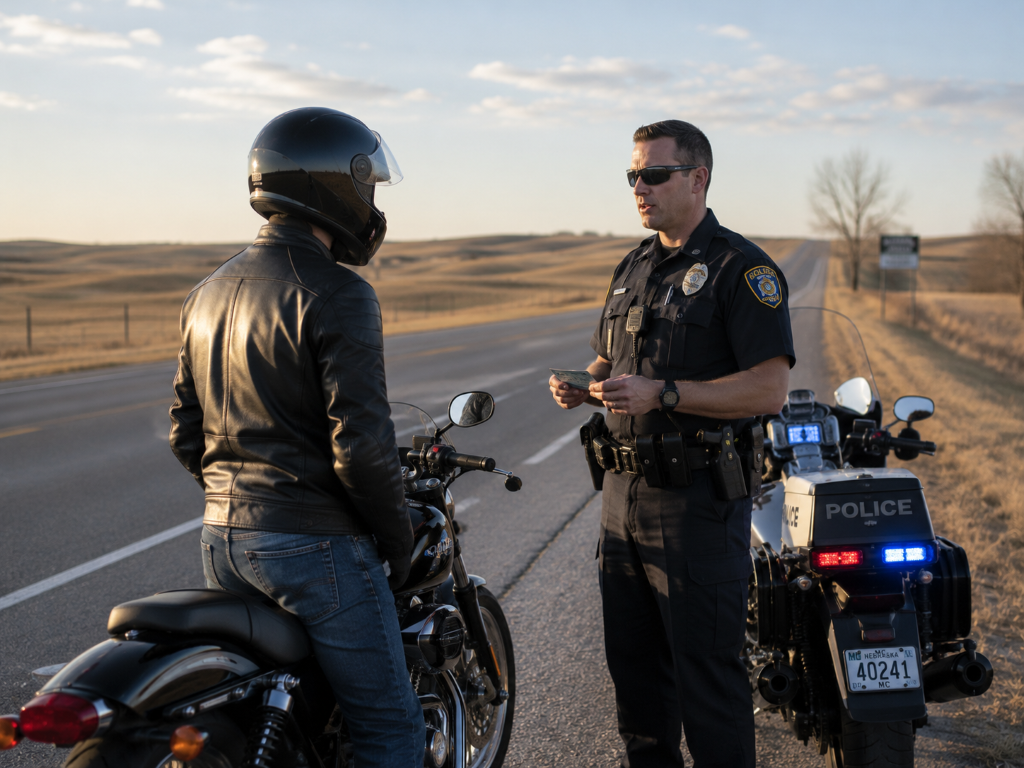
Many riders are surprised by how strict Nebraska’s rules are compared to neighboring states. Some states enforce helmet use only for riders under 21. Nebraska enforces them universally. If you cross into Nebraska on a ride, the law applies to you the moment you enter the state, regardless of what the rules were where you started.
This matters especially for riders in the Omaha metro area, where trips across the Iowa border are common. Iowa requires helmets only for riders under 18. That difference can catch out-of-state passengers off guard when riding with Nebraska-based operators.
What Is the Rider Responsible for When Carrying a Passenger?
Being the operator of a motorcycle comes with a set of legal responsibilities that go beyond just your own safety gear. When you carry a passenger, some of that responsibility extends to them as well.
The Rider’s Duty of Care to a Passenger
As the operator, you have a duty of care toward your passenger. This is a legal concept that means you are expected to act reasonably to keep your passenger safe. That includes making sure they are properly equipped before you take off. Knowingly allowing a passenger to ride without a compliant helmet puts you in a difficult position legally if that passenger is injured in a crash.
You cannot force an adult to make certain choices. But you can choose not to carry them until they are properly protected. Courts and insurance companies will look at whether you took reasonable steps before the ride began.
What Nebraska Law Places on the Operator
The Nebraska traffic code does not specify an explicit fine for passengers riding without helmets, separate from the operator’s own obligation. However, the violation is still important. If a passenger is not wearing a helmet, that detail may become part of the legal discussion because the motorcycle was being operated under your control.
Passenger safety violations can also factor into how fault is evaluated after an accident. If you were operating the motorcycle and your passenger was not wearing a helmet, that issue may arise during the claims or legal process. An Omaha motorcycle accident attorney can help explain how helmet use, passenger responsibility, and operator liability may affect the case.
Equipment and Passenger Readiness Beyond the Helmet
Helmet compliance is the most significant obligation, but responsible operation when carrying a passenger includes more than that. Nebraska law also requires that the motorcycle have a seat designed for a passenger and footrests for them to use. A passenger cannot legally ride on a bike that was not designed to carry one.
Before any ride with a passenger, confirm:
- The motorcycle has a proper passenger seat
- Footrests are present and usable
- Both you and your passenger are wearing DOT-compliant helmets
- Your passenger is aware of basic safety practices, including how to hold on and lean with the bike
How Does a Passenger Helmet Violation Affect a Personal Injury Claim?
This is where the legal stakes become very real. A missing helmet at the time of a crash can have a significant impact on a passenger injury claim in Nebraska.
Nebraska’s Contributory Negligence Rules
Nebraska follows a modified comparative fault system. Under this system, your ability to recover compensation depends on how much you are considered at fault for your own injuries. If you are found to be 50 percent or more at fault, you cannot recover anything. If you are less than 50 percent at fault, your recovery is reduced by your percentage of fault.
A passenger who was not wearing a helmet may be found partially responsible for their own head or brain injuries. The defense in a personal injury case will almost certainly argue that the lack of a helmet contributed to the severity of those injuries. That argument can reduce the amount of compensation the passenger receives, sometimes dramatically.
How Shared Liability Works in These Cases
Shared liability means more than one party may bear responsibility for what happened. The driver who caused the crash bears primary responsibility. But the passenger’s own failure to wear a helmet introduces a second layer of liability analysis. Both factors can reduce what the passenger ultimately collects.
It is worth noting that the helmet violation affects compensation for injuries that a helmet could have prevented. For example, if a passenger suffered a broken arm but no head injuries, the lack of a helmet may carry less weight. But for traumatic brain injuries or skull fractures, the argument becomes very strong for the defense.
Why Legal Guidance Matters After a Motorcycle Crash
Navigating shared liability and Nebraska’s fault rules is not something most people can do alone. Insurance companies know how to use helmet violations to minimize what they pay. We have seen cases where legitimate claims were undervalued because the passenger’s lack of a helmet was used as a bargaining chip.
We work with injured passengers and riders to ensure the full picture is presented. A helmet violation does not automatically disqualify you from recovering compensation. How that violation is framed, and how your injuries are documented, can make a real difference in the outcome.
Ready to Talk Through Your Situation?
If you or someone you were riding with was hurt in a motorcycle crash in Nebraska, we encourage you to reach out before making any decisions or talking to the insurance company on the other side. We can review what happened and explain your options clearly, without pressure.
Our team understands the local roads, the Nebraska traffic code, and how insurance carriers in the Omaha area approach motorcycle injury claims. A conversation with us costs nothing and can help you understand exactly where you stand.
Contact us today to speak with someone who understands Nebraska motorcycle law from the ground up.
Understanding the Nebraska motorcycle helmet law and how it applies to passengers is the first step. Getting the right legal support after a crash is the next step.
Frequently Asked Questions
Does a motorcycle passenger have to wear a helmet in Nebraska even if they are an adult?
Nebraska requires every person on a motorcycle to wear a DOT-compliant helmet, regardless of age. There are no exceptions for adult passengers under the Nebraska motorcycle helmet law, and the requirement applies statewide.
Can a passenger still file a personal injury claim if they were not wearing a helmet during the crash?
A passenger can still file a claim. However, Nebraska’s modified comparative fault rules mean the lack of a helmet may reduce the compensation they receive, particularly for head or brain injuries. We help clients understand how this factor applies to their specific case.
What happens if the motorcycle operator did not make sure the passenger had a helmet?
The operator’s awareness of the situation should be taken into account when evaluating a fault. Knowingly carrying a passenger without a compliant helmet can contribute to questions about the rider’s duty of care, which may affect how liability is assigned in any resulting personal injury claim.