If you have been hurt in a collision at a busy West Omaha crossroads, you already know how fast everything can change. Understanding which intersections carry the highest risk, and why, can help you make sense of what happened and what your options are.
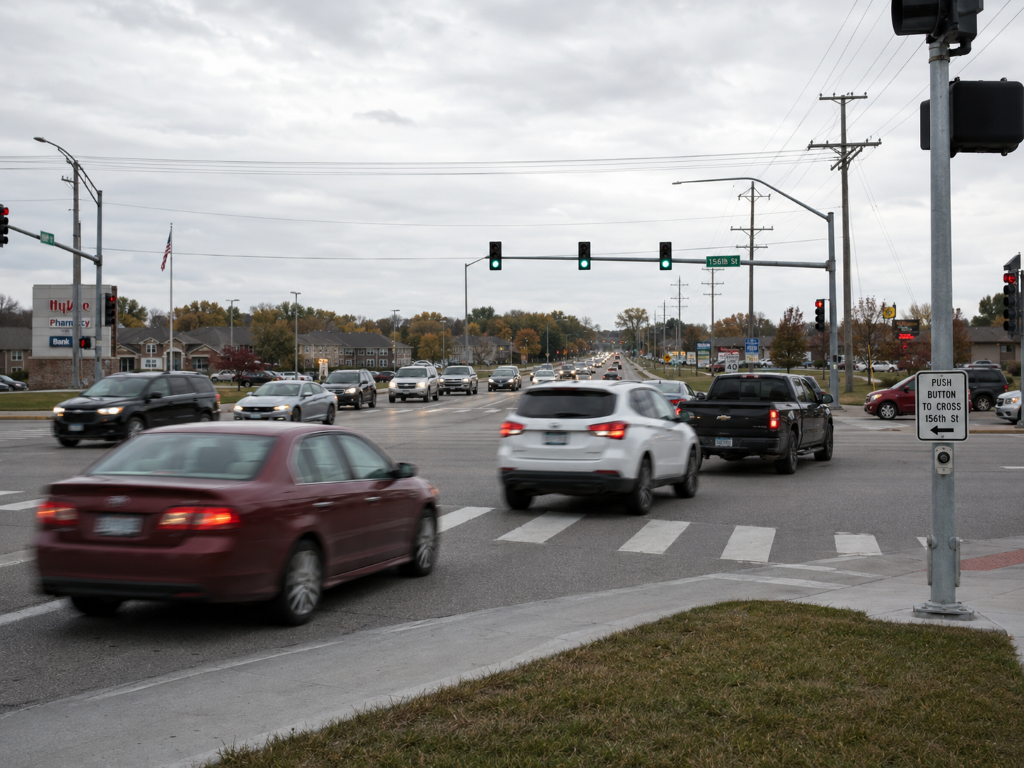
West Omaha has grown rapidly over the past two decades. That growth has brought heavier traffic volume, more complex road layouts, and a steady rise in intersection-related crashes. The areas around Dodge Street, 168th Street, and other high-volume corridors see some of the most active crash reporting in the region. Knowing where these collisions concentrate, and what road conditions contribute to them, matters when liability is in question.
Which West Omaha Intersections See the Most Crashes Each Year?
Not every intersection carries the same level of risk. Certain locations in West Omaha consistently appear in police crash reports because of their traffic volume, signal timing, speed limits, or the mix of commercial and residential activity surrounding them.
Dodge Street Corridors
Dodge Street accidents are among the most frequently reported in West Omaha. The stretch running from roughly 120th Street out to 180th Street handles an enormous volume of daily commuter traffic. Wide speed limits, multiple access points for commercial driveways, and frequent lane changes create conditions where rear-end collisions and side-impact crashes happen regularly. The intersections at 144th and Dodge and at 156th and Dodge stand out in particular based on reported crash frequency.
168th Street and Surrounding Cross Streets
The 168th Street corridor has expanded significantly as West Omaha has developed. Intersections where 168th crosses Pacific Street, Center Street, and Blondo Street all carry elevated crash rates. Many of these crashes involve drivers making sudden turns from commercial parking areas or misjudging gaps in oncoming traffic at signalized intersections. The combination of high vehicle counts and close commercial development puts this corridor among the most active for West Omaha traffic collisions.
Maple Street and Northwest Omaha Connections
Further north, the Maple Street corridor feeds traffic from rapidly growing residential areas into older commercial zones. The intersections around 132nd and Maple and 156th and Maple generate a meaningful number of police reports each year, particularly for crashes involving delivery vehicles, school-zone traffic, and morning commute congestion. Suburban intersection safety is a concern here because road infrastructure in these areas has not always kept pace with population growth.
What Types of Accidents Happen Most in West Omaha?
Understanding the crash type matters as much as knowing the location. Different collision patterns point to different causes, and cause directly affects liability.
Left-Turn Crashes at Signalized Intersections
Left-turn crash risk is one of the most well-documented problems at busy urban intersections. In West Omaha, drivers making unprotected left turns across multiple lanes of oncoming traffic account for a significant portion of reported collisions. These crashes tend to produce serious injuries because the turning vehicle takes the full impact of an oncoming car traveling at speed. Intersections without protected left-turn signal phases are especially prone to this pattern.
Rear-End Collisions on High-Speed Arterials
Along Dodge Street and other multi-lane arterials, rear-end crashes happen frequently during peak commute hours. A driver decelerating for a yellow light or slowing for a left turn can be struck by a following vehicle that did not have enough stopping distance. These collisions may seem minor at first, but they commonly cause soft-tissue injuries, cervical strain, and in some cases, traumatic brain injuries, especially at higher speeds.
Angle and T-Bone Impacts
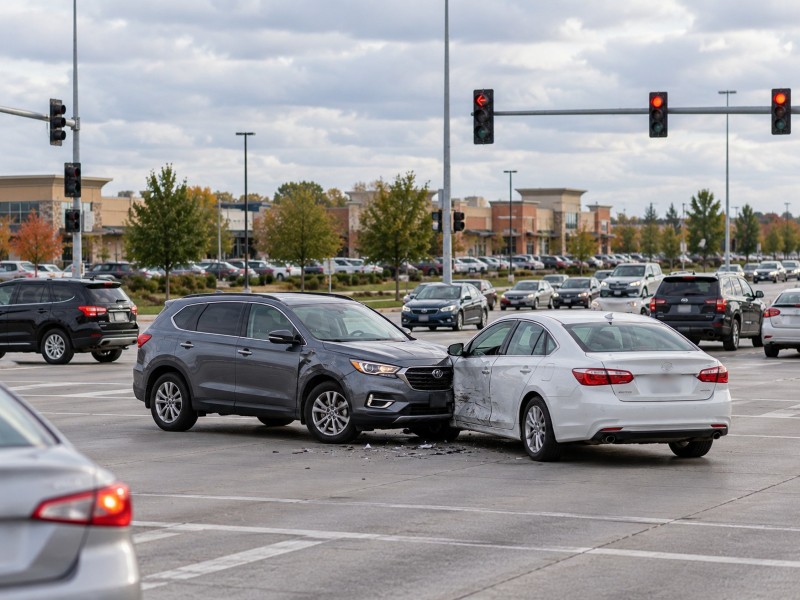
Angle crashes, sometimes called broadside or T-bone collisions, occur when one vehicle enters an intersection without properly yielding. This can happen when a driver runs a red light, misjudges a gap, or fails to see oncoming traffic because of a blocked sightline. These crashes are among the most dangerous because the side of a vehicle offers far less protection than the front or rear. Occupants seated on the struck side face the greatest risk of serious harm.
How Does Road Design Contribute to West Omaha Collision Rates?
Not every crash results purely from driver error. Road design, signal placement, and lane configuration all affect how safely traffic moves through an intersection. When engineering choices contribute to a crash, liability can extend beyond individual drivers.
Signal Timing and Intersection Geometry
Nebraska road engineering standards require that signal timing account for pedestrian crossing time, turning vehicle clearance, and vehicle queuing. When signal phases are too short or intersection geometry creates blind spots, even careful drivers can end up in dangerous situations. Some intersections in West Omaha have signal timing that reflects older traffic patterns and has not been updated to match current volume. This gap between capacity and design is a known contributor to collision frequency.
Access Point Density Along Commercial Corridors
Many West Omaha arterials have a high density of commercial driveways and access points near signalized intersections. When drivers pull in and out of parking lots near crossroads, they create unpredictable movement patterns that conflict with through-traffic. This access-management problem is common along segments of Dodge Street and newer commercial corridors near 180th Street.
Inadequate Lighting and Sight Distance
Poorly lit intersections and locations where vegetation, signage, or parked vehicles reduce sight distance increase crash risk, especially for left-turn and cross-traffic movements. Some intersections in West Omaha’s older commercial zones lack adequate overhead lighting for nighttime traffic. When reduced visibility contributes to a collision, road authority maintenance records can matter in a liability analysis.
Frequently Asked Questions
How do I know if the intersection design played a role in my West Omaha crash?
Intersection design factors like signal timing, sight distance, and access point placement can all contribute to a collision. Reviewing police reports, engineering records, and crash history for that specific location helps identify whether design contributed to what happened. We can help gather and review that information as part of a case evaluation.
What should I do after being injured at a high-traffic Omaha intersection?
Seeking medical attention right away is the most important step, both for your health and to create a record of your injuries. Gathering information at the scene, including photos, witness contact details, and the officer’s report number, helps preserve key evidence. The strength of an injury claim often depends on what is documented in the hours and days immediately following the crash.
Can more than one party be liable for a crash at a West Omaha intersection?
Liability in intersection crashes can involve multiple parties, including other drivers, government entities responsible for road maintenance, or commercial property owners whose driveways created hazardous conditions. Nebraska follows a comparative fault framework, meaning fault can be distributed across more than one party based on the evidence. Identifying all responsible parties is one of the first things we focus on when reviewing an intersection injury claim.