If you drive in Omaha regularly, you already know how quickly a normal commute can turn dangerous. As car accident lawyers, we see firsthand how certain roads produce serious injuries far more often than others. Understanding which corridors carry the highest risk, and why, can help you make smarter decisions behind the wheel and know your options if something goes wrong.
Which Omaha Roads Have the Most Car Accidents?
Omaha is one of the fastest-growing cities in the Midwest, and its road network has struggled to keep pace. More drivers, more delivery trucks, and more construction zones have pushed Omaha traffic collisions to levels that concern local safety planners and law enforcement alike.
The Corridors That See the Most Crashes
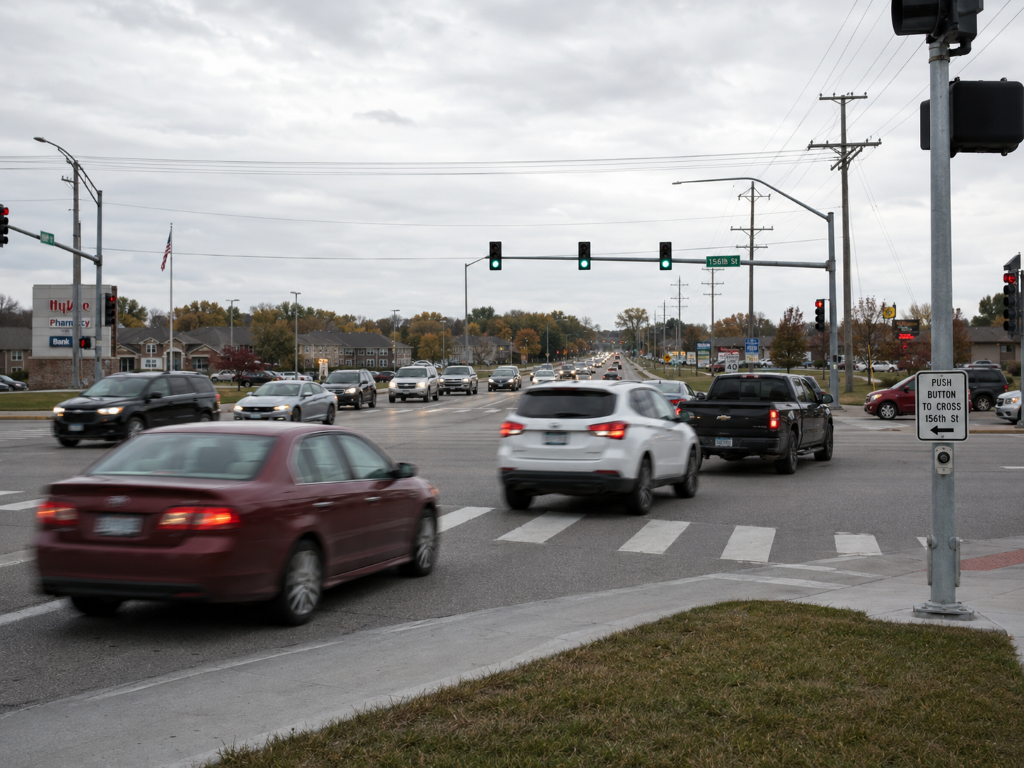
Several corridors stand out in local crash data year after year. Dodge Street, West Center Road, 72nd Street, and the interchange areas around I-80 and I-480 consistently appear among the most reported locations for serious accidents in the metro area. These are not just busy roads. Speed, traffic volume, and road design combine in ways that increase the chance of a collision.
High-crash intersections along 72nd Street, particularly near Dodge and near Pacific Street, have long histories of rear-end crashes and angle collisions. The mix of retail traffic pulling in and out of driveways, pedestrian crossings, and high vehicle speeds creates a difficult environment even for careful drivers.
Why Local Road Design Plays a Role
Many of Omaha’s busiest surface streets were built decades ago and were not designed for today’s traffic volumes. Lane widths, turn lane lengths, and signal timing that made sense in the 1980s can create dangerous gaps and conflicts today. Drivers making left turns across oncoming traffic, merging into fast-moving lanes with limited sight distance, and navigating poorly timed signals all contribute to Omaha’s accident statistics.
Road conditions also shift with Nebraska’s seasons. Ice, frost, and late-winter potholes change how vehicles handle, especially on high-speed corridors where stopping distances are already stretched. A driver who reacts safely in dry conditions may not have enough time or traction to avoid a crash when the road surface changes.
Commercial Traffic and Its Impact on Crash Rates
Omaha sits at a major national crossroads, and that means heavy commercial traffic moves through the metro every day. Freight trucks, delivery vehicles, and semi-trailers share lanes with passenger cars on roads that were not always engineered with that mix in mind. When a large commercial vehicle is involved in a crash, the consequences for smaller vehicles are often severe. We handle commercial truck cases regularly, and the legal questions around liability, cargo, and driver hours add complexity that a general insurance claim process rarely captures well.
Why Is I-80 So Dangerous for Omaha Drivers?
Interstate 80 runs directly through the heart of the Omaha metro, and it carries some of the heaviest traffic volumes in the state. It connects residential areas to downtown, links Omaha and Lincoln, and serves as a major national freight corridor. That combination creates conditions where dangerous Nebraska highways live up to their reputation.
Speed and Volume Working Against Each Other
The posted speed limit on I-80 through Omaha is 65 miles per hour in most stretches, but actual travel speeds during off-peak hours often exceed that. At those speeds, even a small mistake, a drifting lane change, a driver distracted for two seconds, or a vehicle slowing unexpectedly for a merge, can result in a high-impact collision. The gap between a car traveling at 70 mph and one that suddenly slows to 40 mph is measured in feet, not in the seconds most people expect.
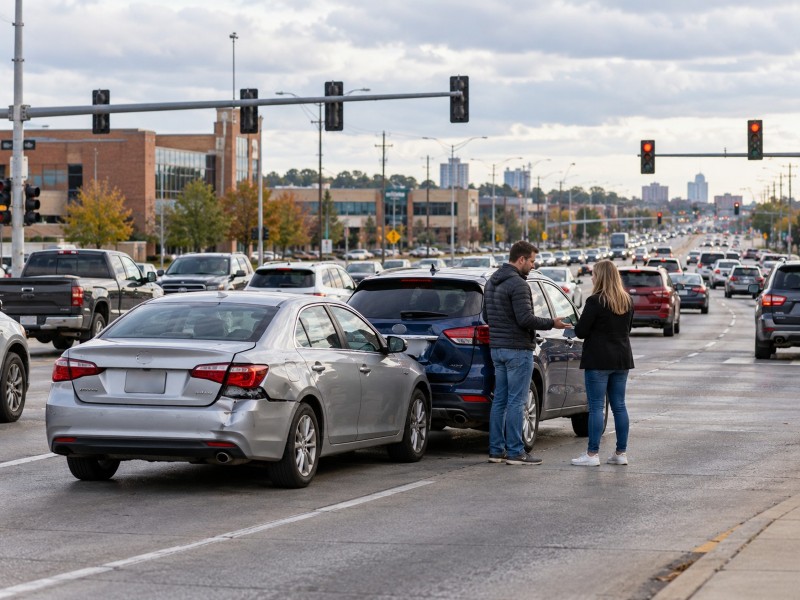
During peak commuting hours, the dynamic shifts. Congestion slows traffic dramatically, and stop-and-go patterns near the I-80 and I-480 interchange create rear-end crash conditions that repeat themselves regularly. These are not random events. They follow predictable patterns at predictable times, which is part of what makes them so frustrating from a Nebraska road safety standpoint.
Construction Zones and Reduced Margins
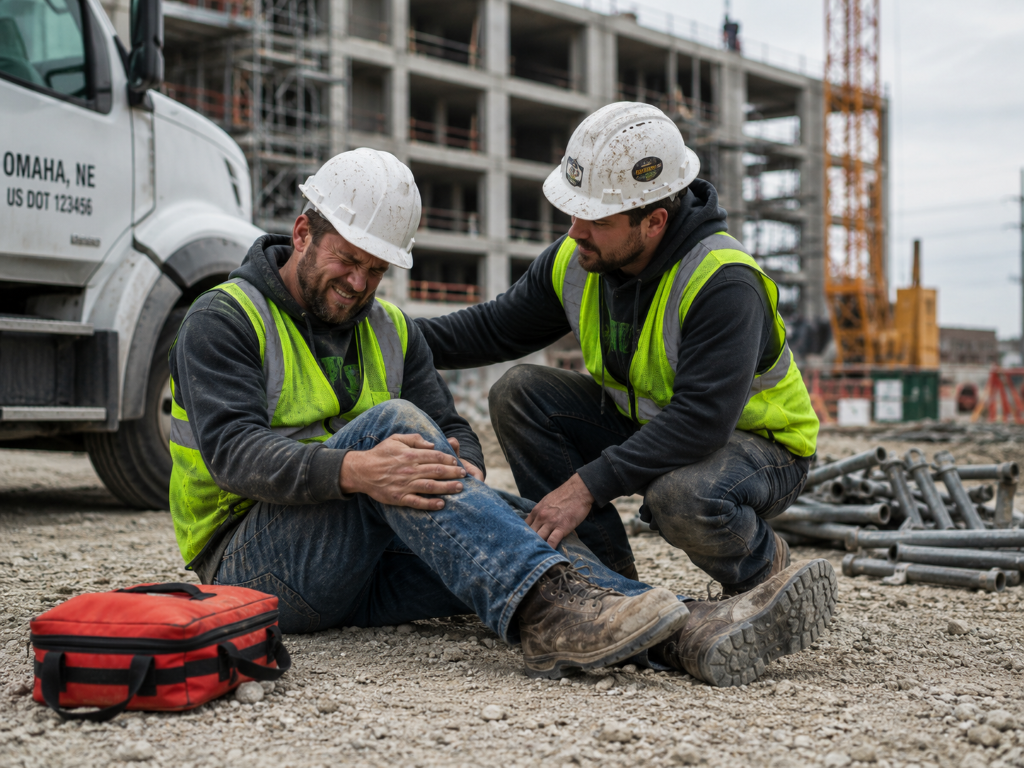
I-80 through Omaha has undergone extended construction and lane reconfiguration in recent years. Construction zones narrow lanes, shift traffic patterns, and reduce the margin for error that drivers normally rely on. Workers operating near live traffic lanes create additional hazards. Nebraska law doubles speeding fines in construction zones, but enforcement varies, and crash rates in active construction zones remain higher than in surrounding sections.
What Happens After an I-80 Crash
I-80 crashes often involve multiple vehicles, and sorting out who bears legal responsibility is rarely simple. When a chain-reaction crash involves three or four vehicles, determining fault requires reviewing police reports, witness statements, traffic camera footage, and sometimes accident reconstruction analysis. As a car accident lawyer Omaha drivers trust with complex interstate claims, we know these cases require more than a quick call to an insurance company.
How Does Dodge Street Traffic Lead to Serious Crashes?
Dodge Street is a central east-west artery through Omaha, and it carries a wide variety of traffic. Commuters, shoppers, pedestrians, cyclists, and delivery vehicles all share the same pavement across stretches that shift from suburban strip mall to denser urban blocks within just a few miles.
The Left-Turn Problem on Dodge
Left turns across heavy traffic are among the most common causes of angle crashes nationwide, and Dodge Street is no exception. At intersections without protected left-turn signals, drivers must judge gaps in oncoming traffic that is often moving faster than it appears. A gap that looks safe at 35 mph may not be safe when approaching vehicles are actually traveling at 50 mph. These judgment errors produce T-bone crashes that cause serious injuries, particularly to drivers and passengers on the side of the vehicle that takes the direct impact.
Pedestrian and Cyclist Risk Along the Corridor
Parts of Dodge Street near the University of Nebraska Medical Center and midtown Omaha have significant pedestrian and cyclist activity. Crosswalk timing, driver awareness, and sight lines do not always align to protect vulnerable road users. Pedestrian injuries from vehicle crashes tend to be severe, and the legal picture in these cases often involves questions about crosswalk signals, driver visibility, and vehicle speed that require careful investigation.
How Commercial Driveways Disrupt Traffic Flow
The stretch of Dodge Street from roughly 72nd Street westward is lined with commercial properties, and drivers entering and exiting those driveways create constant friction with through traffic. A driver pulling out of a parking lot and misjudging oncoming speed, or a vehicle braking suddenly to make a last-minute turn, can trigger rear-end crashes or sideswipe collisions. These incidents may seem minor at low speeds, but they can cause significant injuries, particularly to occupants who were not braced for impact.
Frequently Asked Questions
What makes Omaha roads more dangerous than roads in other cities?
Omaha combines rapid population growth with aging road infrastructure that wasn’t built for current traffic volumes. High-crash intersections, heavy commercial truck traffic moving through the metro on I-80, and seasonal road conditions tied to Nebraska winters all contribute to a higher rate of serious crashes compared to similarly sized cities with newer or more purpose-built infrastructure.
How does fault get determined in a multi-vehicle crash on I-80?
Fault in a multi-vehicle crash is determined by reviewing all available evidence, including police accident reports, witness accounts, traffic and dash camera footage, and physical damage patterns on the vehicles involved. In complex interstate crashes, accident reconstruction specialists are sometimes brought in to establish the sequence of events. Nebraska follows a comparative fault standard, meaning each driver’s share of responsibility can affect what compensation they can recover.
Do I need a lawyer if the insurance company already offered me a settlement?
An insurance settlement offer is the company’s starting position, not a final determination of your claim’s value. Before accepting anything, it is worth having an attorney review the offer against the full picture of your medical costs, lost income, and long-term needs. We often find that initial offers don’t account for all the damages a person has suffered, and accepting too early can limit your ability to seek additional compensation later.