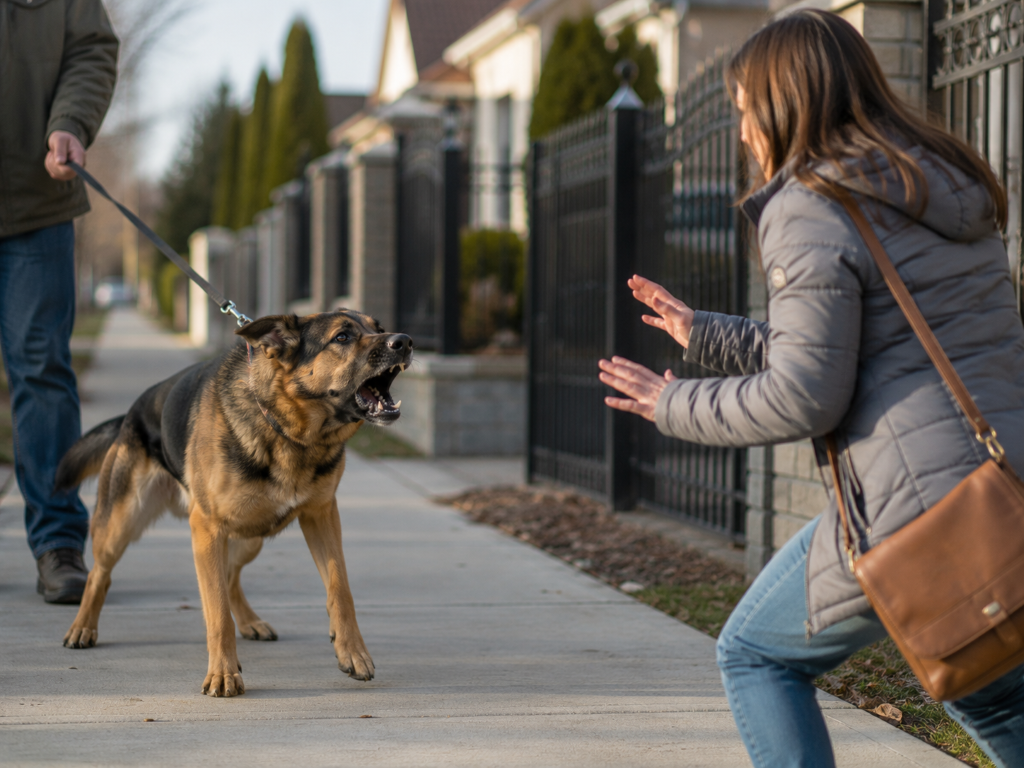
If you or someone you love was attacked by a dog in Lincoln, Nebraska, understanding Lincoln dog bite owner liability could be the difference between recovering your losses and walking away with nothing.
What Are Lincoln’s Animal Control Ordinances for Dog Owners?
Lincoln has its own set of rules that every dog owner must follow. These rules come from the municipal animal control code and exist alongside Nebraska state law. Knowing both sets of rules matters when you are trying to hold an owner responsible after a dog attack.
The City’s Core Rules for Dog Owners
Lincoln’s animal control code covers several key requirements:
- Dogs must be licensed and vaccinated against rabies.
- Dogs must be kept under the owner’s control at all times when outside.
- A dog found roaming freely can be classified as a dog at large; a Lincoln code violation.
- Dangerous dogs must be securely confined or muzzled in public.
These are not just suggestions. They are legal obligations. When an owner breaks one of these rules, that failure can become important evidence in your injury case.
What Counts as a Dangerous Dog Under Lincoln Law?
Lincoln’s code allows animal control officers to formally label a dog as dangerous or potentially dangerous after a reported incident. Once that label is applied, the owner faces stricter duties. They must post warning signs, keep the dog in a locked enclosure, and, in some cases, carry liability insurance.
If an owner ignores those extra duties and the dog bites again, the violation is even harder to explain away. The city’s own records can be used to show that the owner knew the dog was a risk.
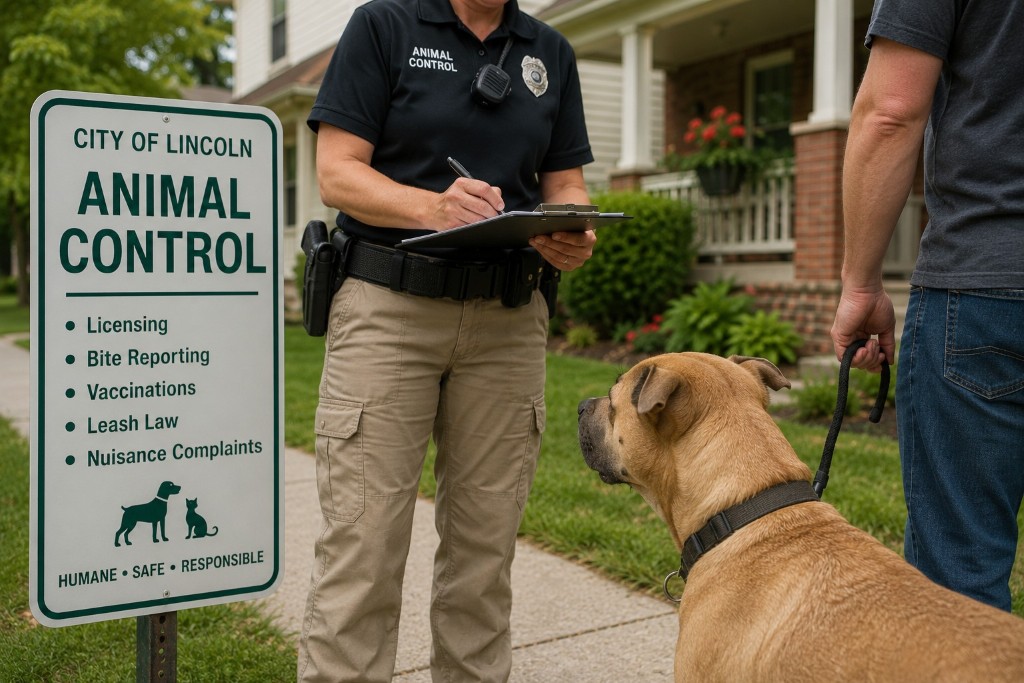
How Animal Control Records Help Your Case
After a dog attack, animal control typically creates a report. That report may include the dog’s bite history, any prior complaints from neighbors, and whether the owner had past Lincoln ordinance violations tied to that animal. These records can be requested and used as evidence. We review these documents carefully because they often tell a story that a simple eyewitness account cannot.
How Does a Leash Law Violation Affect Lincoln Dog Bite Owner Liability?
The Lincoln leash law requires owners to keep their dogs restrained when in public spaces. This rule is straightforward, but its legal effect in an injury case is significant and often misunderstood.
Understanding the Lincoln Leash Law
Under Lincoln’s animal control code, dogs must be on a leash no longer than eight feet when off the owner’s property. A dog that breaks free and bites someone on a public sidewalk or in a park is almost certainly in violation of this rule. Even a dog that escapes from an unfenced yard and attacks someone on a neighboring property can trigger a leash law concern.
The violation itself is a civil infraction. However, in a personal injury case, that infraction can carry much greater weight.
What Is Negligence Per Se in Nebraska?
Negligence per se in Nebraska is a legal concept that matters here. It means that when someone breaks a law that was designed to protect the public, they can be considered automatically negligent in a civil case. You do not have to prove they acted carelessly in a general sense. The violation of the law is sufficient to show that a duty was broken.
In plain terms, if an owner broke the Lincoln leash law and their dog attacked you, that violation may be used to establish liability without requiring extra proof of carelessness. This is a powerful tool in dog bite cases.
How We Use Leash Law Violations in an Injury Claim
We gather the animal control report, any police records, and witness statements to document exactly what happened. If the dog was off-leash in a public area, that fact becomes a centerpiece of the liability argument. When combined with medical records documenting your injuries, a leash law violation can move a case toward a faster resolution.
When Do Local Ordinances Override the Nebraska One-Bite Rule?
Nebraska follows what is often called the one-bite rule. This rule traditionally gave dog owners some protection the first time their dog bit someone, as long as the owner had no prior reason to believe the dog was dangerous. Lincoln’s local ordinances change that picture significantly.
What the Nebraska One-Bite Rule Actually Means
The one-bite rule does not mean an owner gets a free pass for the first attack. What it means is that a victim must show the owner knew or had reason to know the dog was dangerous. This knowledge element can be hard to prove if the dog has no prior bite history. That is where local ordinances become critical.
How a Lincoln Ordinance Violation Changes the Analysis
When an owner violates a Lincoln ordinance designed to prevent harm, such as the leash law or the dangerous dog confinement rules, that violation can serve as independent proof of negligence. The victim no longer has to rely only on the one-bite framework to establish liability.
For example, imagine a dog escapes from an unfenced yard and attacks a child. Even if that dog had never bitten anyone before, the owner still violated Lincoln’s animal control code by failing to confine the animal. That violation, under the negligence per se doctrine, can be enough to hold the owner responsible. The one-bite rule becomes less of an obstacle.
Real Situations Where Ordinances Can Make the Difference
Here are a few scenarios where local ordinances might override or sidestep the one-bite rule:
- Dog at large: The dog was off-leash and unsupervised in the neighborhood when it attacked.
- Unlicensed dog: The owner never licensed the animal, suggesting a pattern of ignoring legal duties.
- Dangerous dog violations: The dog was formally designated as dangerous, and the owner failed to comply with the confinement requirements.
- Vaccination non-compliance: The dog was not vaccinated, increasing the risk of complications after a bite.
In each of these situations, the city’s own rules create a path to liability that does not depend on proving the owner’s prior knowledge of the dog’s aggressive behavior.
Frequently Asked Questions
Does Nebraska’s one-bite rule mean the owner gets off the hook if their dog never bit anyone before?
Not necessarily. If the owner violated a local ordinance, such as Lincoln’s leash law or dangerous dog rules, that violation may establish liability on its own through the negligence per se doctrine. We often use these ordinance violations to build a strong case even when there is no prior bite history on record.
What should I do right after a dog bite in Lincoln?
Seek medical attention immediately, then report the incident to Lincoln Animal Control. Collect the owner’s contact information, document your injuries with photos, and ask for the names of any witnesses. The sooner these steps are taken, the stronger your evidence will be.
How does a Lincoln leash law violation help prove a dog bite claim?
When an owner breaks the Lincoln leash law, Nebraska courts may treat that as negligence per se, meaning the legal violation itself is evidence of negligence. You do not have to prove the owner was careless separately. That shortcut can make it significantly easier to recover compensation for your injuries.