
When you suffer a slip and fall on ice in Omaha, the pain and confusion can feel overwhelming. This article breaks down what Nebraska premises liability law requires of property owners, so you know exactly where you stand and what your rights are after a winter fall.
What Is Premises Liability and How Does It Apply to Ice and Snow in Nebraska?
Premises liability is the area of law that holds property owners responsible for injuries that happen on their property. When someone is injured due to unsafe conditions, such as ice that was never cleared, the owner may be legally liable for those injuries.
In Nebraska, this law applies directly to winter hazards. Ice and snow are not just inconveniences. They are recognized dangers that property owners may have a duty to address within a reasonable time. We can help injured victims understand whether a property owner failed to take reasonable steps to prevent a winter slip-and-fall accident.
The Core Duty of Care in Nebraska
Under Nebraska law, property owners owe a duty of care to people who come onto their property. That duty means they must take reasonable steps to keep the property safe. For winter conditions, reasonable steps include shoveling snow, applying ice melt or sand, and warning visitors about areas that have not yet been treated.
The keyword is “reasonable.” The law does not expect property owners to clear every inch of snow the moment a storm ends. However, once a dangerous condition exists and the owner knows about it or should know about it, they are expected to act. Waiting days without taking any action is not reasonable.
When Natural Accumulation Rules Apply
Nebraska courts have wrestled with the “natural accumulation” doctrine. Under this older legal idea, property owners in some states were not responsible for injuries caused by naturally occurring snow and ice. Nebraska has moved away from a strict version of this rule.
Today, Nebraska courts consider whether the owner acted reasonably in light of all the circumstances. If ice built up from a leaking gutter over a sidewalk, that is not just natural accumulation. The owner created or contributed to the hazard. That matters when building a slip-and-fall premises liability case.
Why Documentation Matters Right Away
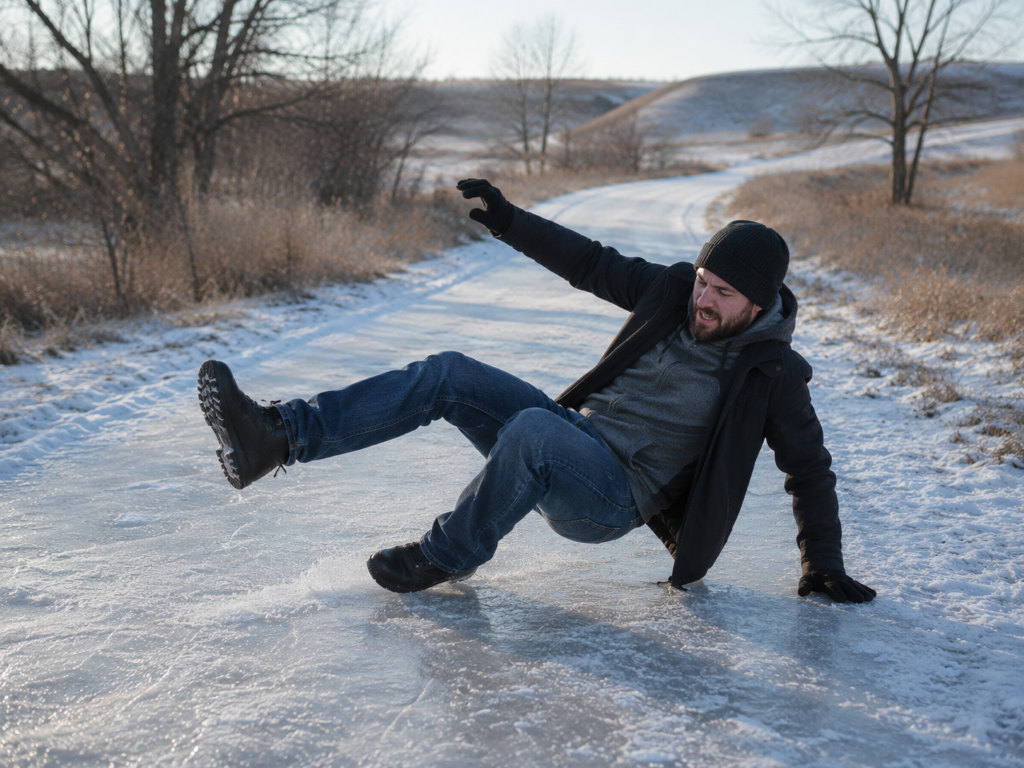
If you fall on ice, take photos immediately if you are able. Document the time, the location, and the conditions. Get the names of any witnesses. This evidence becomes critical in proving that a dangerous condition existed and that the owner failed to address it. We see cases weaken when people wait too long to gather this information.
How Does Visitor Status Change a Property Owner’s Duty in Omaha?
Not everyone who steps onto a property is owed the same level of protection. Nebraska law divides visitors into three categories, each with a different standard of care. Knowing where you fall in this classification can directly affect your case.
Invitees: The Highest Level of Protection
An invitee is someone who enters the property for a purpose the owner has invited them to, either expressly or by implication. Customers in a grocery store are invitees. So are guests at a hotel or shoppers in a strip mall parking lot.
Property owners owe invitees the highest duty of care. They must regularly inspect the property, fix known hazards, and warn visitors of dangers they cannot immediately fix. If you slipped and fell on ice in an Omaha parking lot while shopping, you were almost certainly an invitee. That works in your favor.
Licensees: Social Guests and Others With Permission
A licensee is someone who has permission to be on the property but is there for their own purpose, not the owner’s business interest. A friend visiting your home is a classic example.
Property owners must warn licensees of known dangers, but they are not required to inspect the property looking for hidden hazards. This is a lower standard than what is owed to invitees. However, if an owner knew about icy steps and said nothing, they can still face liability for a licensee’s injuries.
Trespassers: Limited Protection but Not Zero
A trespasser is someone on the property without permission. In most cases, property owners owe trespassers very little. They generally do not have to make the property safe for people who were never supposed to be there.
There are exceptions, especially for children. Nebraska follows the “attractive nuisance” doctrine, which can extend protection to children who trespass onto property and get hurt because of a dangerous condition that a child could not be expected to understand. When a slip-and-fall on ice in Omaha involves a child, visitor status and age both become important factors.
What Happens When a Business Owner Ignores an Icy Parking Lot?
A business property winter hazard becomes a legal problem when the owner knows about it and does nothing. This is where negligent maintenance enters the picture, and it is the basis for many of the winter injury cases we handle.
Proving Negligence After a Commercial Property Fall
To win a premises liability claim in Nebraska, four elements generally need to be established. First, the property owner owed you a duty of care. Second, they breached that duty by failing to act reasonably. Third, that breach directly caused your injury. Fourth, you suffered actual damages, such as medical bills, lost wages, or pain and suffering.
In a commercial setting, a breach often looks like this: an icy parking lot reported by employees or other customers, a manager who was notified but took no action, or a business with no ice removal policy at all. Any of these facts can demonstrate that the owner failed their legal obligation.
What “Reasonable Time” Actually Means in Practice
Nebraska courts do not set a fixed number of hours within which a property owner must clear ice. Instead, they look at the full picture. How long had the condition existed? Did the owner have notice? Was the hazard obvious and in a high-traffic area?
A thin patch of black ice on a rarely used side entrance is treated differently from a sheet of ice directly in front of a main entrance with heavy foot traffic. Location, visibility, and how long the owner had to fix the problem all factor into whether their response was reasonable.
Our Approach to Winter Slip and Fall Cases
We have seen how quickly these cases can become complicated. Insurance companies often argue that ice was obvious, that you were not watching where you were going, or that the fall happened on a different part of the property. We work through those defenses carefully by reviewing weather records, surveillance footage, maintenance logs, and medical documentation.
If you are ready to talk about what happened, we are ready to listen. Reach out to us for a free consultation and let us walk you through your options.
Understanding your rights after a slip and fall on ice in Omaha is not just about one bad day. It is about making sure property owners are held to the standard the law requires. If a business or landlord ignored a known ice hazard and you got hurt because of it, you have every right to pursue compensation. We are here to help you do exactly that.
Frequently Asked Questions
How long does a property owner have to clear ice in Omaha before they are liable?
Nebraska law does not set a specific number of hours, but courts look at whether the owner responded within a reasonable time given the circumstances. Factors like how long the ice was present, whether the owner had notice, and how heavily trafficked the area was all play a role. If the hazard sat for an extended period without any action, that is strong evidence of negligence.
Does it matter if I slipped in a parking lot versus on a sidewalk?
Location can matter when it comes to who owns or controls the property and what local ordinances apply. In Omaha, the city code places certain snow and ice removal responsibilities on property owners for adjacent public sidewalks. Parking lots on private property are governed by premises liability standards. We review each location carefully to determine who is responsible.
What if the business says the ice was obvious and I should have noticed it?
This is a common defense, but it does not automatically end your case. Nebraska follows a comparative fault rule, meaning your compensation can be reduced if you were partly responsible. However, you can still recover damages as long as you were not more than 50 percent at fault. We evaluate these arguments carefully and build evidence to counter them.