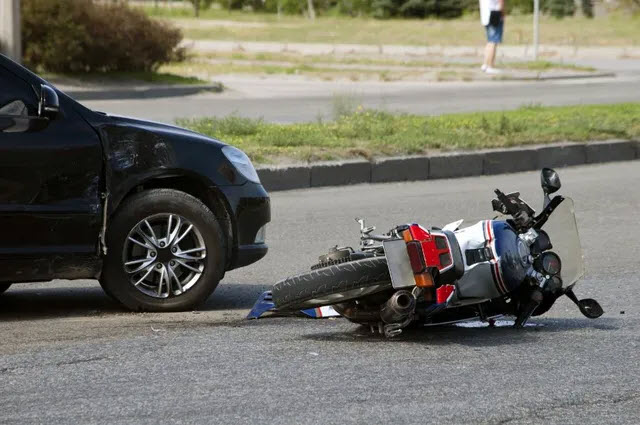
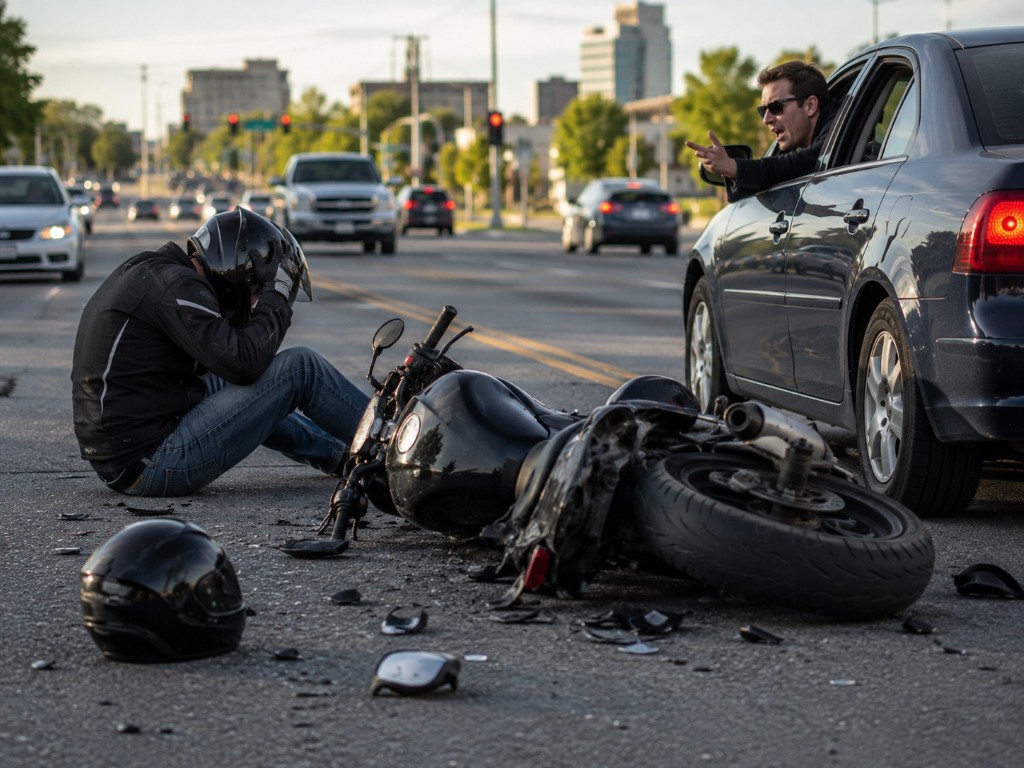
Motorcycle accident injuries are rarely minor. When a passenger car and a motorcycle collide, the physics are brutally uneven. A rider has no steel frame, no airbags, and no crumple zones absorbing the impact. What might leave a car driver shaken but unharmed can send a motorcyclist to a trauma center with life-altering damage. An Omaha motorcycle accident attorney can help an injured rider evaluate how another driver’s negligence contributed to the crash and resulting injuries.
What Driver Mistakes Most Often Cause Serious Motorcycle Injuries?
Not all driving errors create equal danger. For motorcycle riders, certain behaviors by other drivers carry consequences that are far more severe than they would be in a car-on-car collision.
Distracted Driving Behind the Wheel
Distracted driving is one of the leading causes of serious motorcycle crashes in Nebraska. A driver glancing at a phone for even two or three seconds can drift into a lane, miss a rider entering an intersection, or fail to brake in time. Because motorcycles are narrower and less visually prominent than other vehicles, distracted drivers are especially likely to overlook them entirely.
Blind Spot Failures and Lane Changes
A blind spot collision happens when a driver changes lanes without properly checking their mirrors or turning to look. For a motorcyclist riding in that blind spot, the results can be catastrophic. Unlike a car, a motorcycle has very little room to absorb a side impact. Riders are often thrown from their bikes entirely.
Failure to Yield at Intersections
Failure to yield is another frequent cause of serious injury crashes involving motorcycles. A vehicle entering the motorcycle’s path can leave the rider with limited distance in which to brake or take evasive action.
Why Are Left-Turn Accidents So Dangerous for Motorcycle Riders?
Among all crash types involving motorcycles, left-turn accidents are consistently among the deadliest. They account for a significant share of fatal motorcycle crashes nationally, and Omaha riders face the same risk on busy roads like Dodge Street, 72nd Street, and L Street.
How Left-Turn Collisions Happen
A left-turn accident typically occurs when a driver turning left at an intersection misjudges the speed or distance of an oncoming motorcycle. The driver incorrectly assumes there is enough time to complete the turn safely and makes a collision inevitable.
Why Riders Are So Vulnerable at This Moment
In the fraction of a second before a left-turn crash, a rider faces several compounding problems. Their braking distance may be shorter than a car’s at higher speeds, but the body has no protection once contact happens. Road rash, broken collarbones, shattered pelvis bones, and traumatic brain injuries are all common outcomes from this type of collision.
Establishing Who Was at Fault
Under Nebraska traffic law, a driver turning left has a legal duty to yield to oncoming traffic. When a driver fails to do that and injures a rider, the fault framework is relatively clear. The driver had the legal obligation. They did not meet it. That failure is the cause of the injury.
Documentation matters enormously in these cases. Police reports, traffic camera footage, witness statements, and medical records all help establish what happened and who was responsible. We work to gather that evidence carefully, because it directly shapes the value of an injury claim. We may also use this evidence to assess how strongly the available facts support the rider’s claim.
How Does Driver Fault Affect a Motorcycle Accident Injury Claim?
The connection between driver negligence and the legal outcome of a motorcycle accident injury claim is direct. Nebraska follows a comparative fault system, which means fault can be divided between parties. However, if the other driver bears the primary responsibility for the crash, the injured rider may be entitled to substantial compensation.
Why Motorcycle Injury Claims Tend to Involve Higher Compensation
Motorcycle riders typically suffer more severe injuries than occupants of enclosed vehicles in comparable crashes. More severe injuries mean higher medical bills, longer recovery periods, and greater long-term impact on the rider’s ability to work and live normally.
These factors all affect the value of a personal injury claim. Compensation in motorcycle crash cases can include medical expenses, lost income, future care costs, and damages for pain and suffering. When driver negligence is clearly established, the injured party has a stronger basis for recovering the full range of those losses.
How Nebraska’s Comparative Fault Law Works
Nebraska’s comparative fault rule allows an injured rider to recover compensation as long as they are not more than 50 percent at fault for the crash. If a rider is found to be 20 percent at fault, their compensation is reduced by that percentage. If the other driver is found to be 80 percent or more at fault, the rider keeps the larger portion of the compensation.
Frequently Asked Questions
How do I know if the other driver was at fault for my motorcycle crash?
Fault is determined by examining what each driver was legally required to do and whether they did it. Evidence like police reports, traffic camera footage, and witness accounts can show whether a driver ran a red light, failed to yield, or made an unsafe lane change. A review of those facts is usually the starting point for understanding who bears legal responsibility.
Can I still recover compensation if I was partly at fault for the motorcycle accident?
Under Nebraska’s comparative fault law, you may still recover compensation even if you share some responsibility for the crash, as long as your share of fault does not exceed 50 percent. Your total compensation would be reduced by whatever percentage of fault is assigned to you. The key is establishing as clearly as possible that the other driver’s negligence was the primary cause. We can help evaluate how comparative fault may affect the amount that can be recovered.
Why do motorcycle accident injuries often result in larger legal claims than car accident injuries?
Motorcycle riders have far less physical protection than vehicle occupants, which typically leads to more severe and more costly injuries. Higher medical bills, longer recovery times, and greater loss of earning capacity all push the value of a claim upward. When motorcycle accident injuries involve permanent damage or significant life disruption, Abboud Law Firm works to make sure every element of that impact is reflected in the claim.