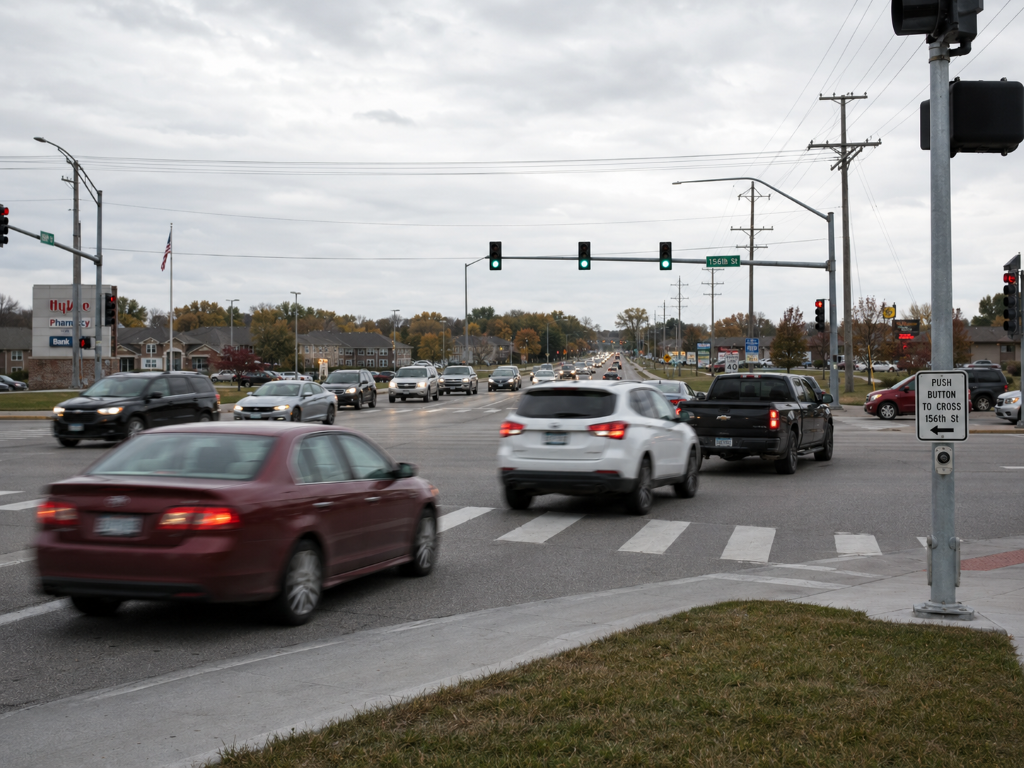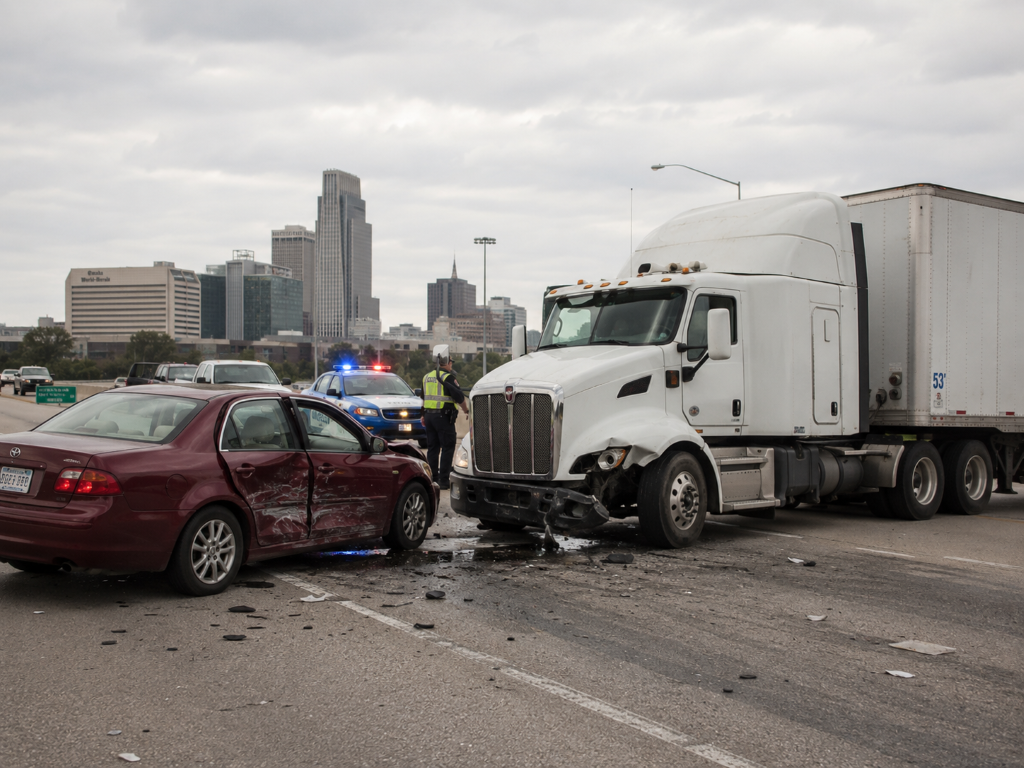
If you have ever driven through Lincoln and thought a certain intersection felt unsafe, you are not alone. Dangerous intersections in Lincoln, NE, are identified through a careful, data-driven process that city engineers follow every year.
Understanding this process matters, especially if you or someone you love has been injured at one of these locations. We believe informed drivers make safer decisions, and we also know that crash data plays a major role in personal injury cases involving intersection accidents.
How Does Lincoln Collect and Use Crash Data for Intersections?
Lincoln’s traffic engineers do not guess which intersections are dangerous. They rely on a structured system of crash reporting, signal monitoring, and volume counts to build a complete picture of where accidents happen and why.
The Nebraska Crash Database and How It Works
Every reported accident in Lincoln gets entered into the Nebraska crash database, a statewide system managed by the Nebraska Department of Transportation. Officers file crash reports after every incident, and those reports include the exact location, time of day, weather conditions, number of vehicles involved, and the severity of injuries.
This database is updated regularly and gives engineers a multi-year view of crash patterns. When a specific intersection appears repeatedly over two or three years, that repetition becomes a red flag that warrants attention.
The data does not just count crashes. It also separates them by type; rear-end collisions, angle crashes, pedestrian strikes, and bicycle accidents are all tracked separately because they point to different root causes.
Traffic Signal Data and Volume Counts in Lincoln
Traffic signal data in Lincoln is collected through sensors embedded in the road and cameras mounted at key intersections. These tools count how many vehicles pass through each hour and track whether drivers run red lights or stop late.
High-volume corridors like O Street, Cornhusker Highway, and 27th Street generate enormous amounts of signal data every single day. Engineers compare that flow data against crash records to find mismatches, spots where volume alone does not explain the accident rate.
When a low-volume intersection has a surprisingly high crash rate, that is often a sign of a design flaw, a sight-line problem, or a confusing signal pattern that needs correction.

How Engineers Turn Raw Numbers Into Actionable Rankings
Collecting data is only the first step. Lincoln’s traffic engineering team runs that raw data through a scoring formula that accounts for crash frequency, crash severity, and the type of conflict happening at each location.
A single fatal crash carries more weight in the formula than five minor fender-benders. This severity weighting ensures that truly dangerous spots rise to the top of the list rather than getting buried under high-volume, low-injury locations.
The result is a ranked list that city officials use to prioritize road improvement budgets. Intersections at the top of that list get reviewed for signal retiming, added turn lanes, improved signage, or full reconstruction.
What Criteria Determine an Intersection to Be Officially High-Risk in Lincoln?
Not every intersection with a few crashes earns the high-risk label. There is a specific set of road safety metrics in Nebraska that engineers use to decide which locations cross the threshold into officially dangerous territory.
Crash Rate Versus Crash Frequency
There is an important difference between crash frequency and crash rate. Frequency is simply how many crashes happened at a location. The rate compares that number to the number of vehicles that actually used the intersection during the same period.
An intersection on a quiet residential street might have five crashes in a year. An intersection on a major arterial road might have fifty. But if the residential intersection has far fewer cars passing through, its crash rate per million vehicles could actually be higher, making it statistically more dangerous.
Intersection safety rankings in Lincoln use rate, not just raw counts, to keep the process fair and accurate across different parts of the city.
Severity Weighting and Injury Classifications
Lincoln uses a five-level injury scale borrowed from the national KABCO system. K stands for killed, A for incapacitating injury, B for non-incapacitating injury, C for possible injury, and O for no injury. Each level carries a different point value in the scoring formula.
An intersection where crashes regularly result in K- or A-level outcomes will score far higher than one with frequent O-level crashes. This severity weighting is what causes some intersections near hospitals or schools to appear on high-risk lists even when their total crash count seems moderate.
Conflict Points and Intersection Geometry
Engineers also evaluate conflict points, the places inside an intersection where vehicle paths cross or merge. A standard four-way intersection has 32 potential conflict points. Add a turn lane, a slip ramp, or an unusual angle, and that number climbs fast.
Intersections along the 27th Street and O Street corridors in Lincoln are especially complex because of heavy commercial traffic, multiple turning movements, and simultaneous pedestrian crossings. More conflict points mean more chances for things to go wrong, and that complexity factors into the official high-risk determination.
How Often Does Lincoln Update Its Dangerous Intersection Rankings?
Lincoln traffic engineering staff do not set the dangerous intersection list once and leave it alone for years. The rankings are reviewed and updated on a regular cycle, and significant crashes can trigger an off-cycle review at any time.
Annual Review Cycles and Data Refresh Windows
The standard review cycle in Lincoln runs annually. Each year, the city pulls fresh data from the Nebraska crash database and reprocesses the rankings using the most recent three to five years of crash records. Using a rolling window of years smooths out unusual spikes from rare events like severe weather or a single high-profile accident.
At the start of each review cycle, intersections that have received safety improvements in prior years get re-evaluated to measure whether those changes actually reduced crashes. If the numbers improve, the intersection may drop off the high-risk list. If crashes continued at the same rate despite changes, engineers would go back to the drawing board.
Triggered Reviews After High-Profile Incidents
Some reviews happen outside the normal annual cycle. When a fatal crash or a crash involving serious injuries occurs at an intersection that was not previously flagged, city engineers can pull the location’s full crash history within days.
This kind of triggered review has led to faster signal upgrades and interim safety measures, such as temporary warning signs or reduced speed limits. At the same time, longer-term fixes are designed and funded.
How Improvement Projects Move Through the Budget Process
Once an intersection earns official high-risk status, it enters the city’s capital improvement planning process. Budget timing, construction-season windows, and available funding sources all affect how quickly changes occur.
We have heard of cases where a flagged intersection waited two or three budget cycles before physical improvements began. During that window, drivers and pedestrians face the same risks that put the location on the list in the first place.
Frequently Asked Questions
How do I find out whether an intersection is on Lincoln’s official list of dangerous intersections?
You can request crash data and intersection safety rankings directly from the Lincoln Transportation and Utilities department or through a public records request to the Nebraska Department of Transportation. We can also help you pull this data if it is relevant to an injury claim.
Can crash data from dangerous intersections in Lincoln, NE, be used as evidence in a personal injury lawsuit?
Official crash records from the Nebraska crash database and intersection safety reports could be admissible in Nebraska civil cases. They can help establish that a hazardous condition existed before your accident occurred.
Does the city of Lincoln have a legal duty to fix dangerous intersections once they are identified?
Nebraska law recognizes that government entities may be liable for known road hazards under certain conditions. However, specific rules about notice, timing, and immunity apply, so speaking with an attorney familiar with Nebraska traffic and municipal law is the best first step.